LightBlog

vendredi 23 septembre 2022

One UI 5 beta 3 for the Galaxy S22 series rolls out with support for themed icons, improved animations, and more

Samsung has started rolling out the third One UI 5 beta build for its flagship Galaxy S22 series in the U.S. and a few other regions. The Android 13 beta update (firmware version ZVI9) brings several improvements and bug fixes, including themed icon support for more apps, improved animations, and more.

While previous One UI 5 beta builds for the Galaxy S22 series offered themed icon support, it was limited to Samsung’s first-party apps. With the latest beta release, Samsung has extended themed icon support to more apps (via 9to5Google).

However, as Mishaal Rahman points out, many Google apps, like Google One, Home, Snapseed, Translate, and YT Studio, still don’t have themed icons on the third beta release. That’s because Google hasn’t updated these apps to offer a monochromatic app icon, which is necessary for the themed icon implementation.

Interestingly, these apps have themed icons on Pixel devices because of a Launcher3 flag that forces the Pixel Launcher to “use inbuilt monochrome icons if app doesn’t provide one.”  Since the Pixel Launcher is exclusive to Google’s devices, its themed icon fallbacks aren’t implemented in AOSP Launcher3 builds. As a result, the aforementioned apps don’t have themed icons in the One UI 5 beta 3 release. However, this shouldn’t be a problem for most users, as Google will likely update the affected apps by the time One UI 5 rolls out on the stable channel.

One UI 5 Beta 3 changelog screenshot 1 One UI 5 Beta 3 changelog screenshot 2 One UI 5 Beta 3 changelog screenshot 3

Along with themed icon support, One UI 5 beta 3 brings some animation improvements, a new immersive slideshow-style stories feature for the Gallery app, and a host of other bug fixes. You can check out the full changelog in the screenshots attached above.


Via: 9to5Google

The post One UI 5 beta 3 for the Galaxy S22 series rolls out with support for themed icons, improved animations, and more appeared first on XDA.


from XDA https://ift.tt/MfWF9Cw
via IFTTT

New Pixel Watch teaser showcases its unique twist-lock strap mechanism, confirms Gorilla Glass protection

Google will officially announce the Pixel 7 series and the Pixel Watch at a hardware launch event early next month. In the days leading up to the event, the company has started sharing teasers showcasing all the upcoming products. A few days ago, Google shared a video on the Made by Google YouTube channel, giving us a closer look at the new Pixel collection. However, the video only included a short clip of the highly-anticipated Pixel Watch. Now, the company has shared a slightly longer video of its first Wear OS smartwatch highlighting its premium design.

The new video, titled The Design of Google Pixel Watch, showcases the smartwatch from all angles. Although we’ve seen several images of the Pixel Watch in the last few months, this is the first time Google has officially shown off its unique twist-lock strap mechanism.

The video also showcases some of the new watch faces that Google will ship with the Pixel Watch. Sadly, all the watch faces included in the video have a black background, so it’s difficult to tell where the watch’s display ends and where the bezel begins. Regardless, the watch’s seamless case design makes it look like it has chunky bezels.

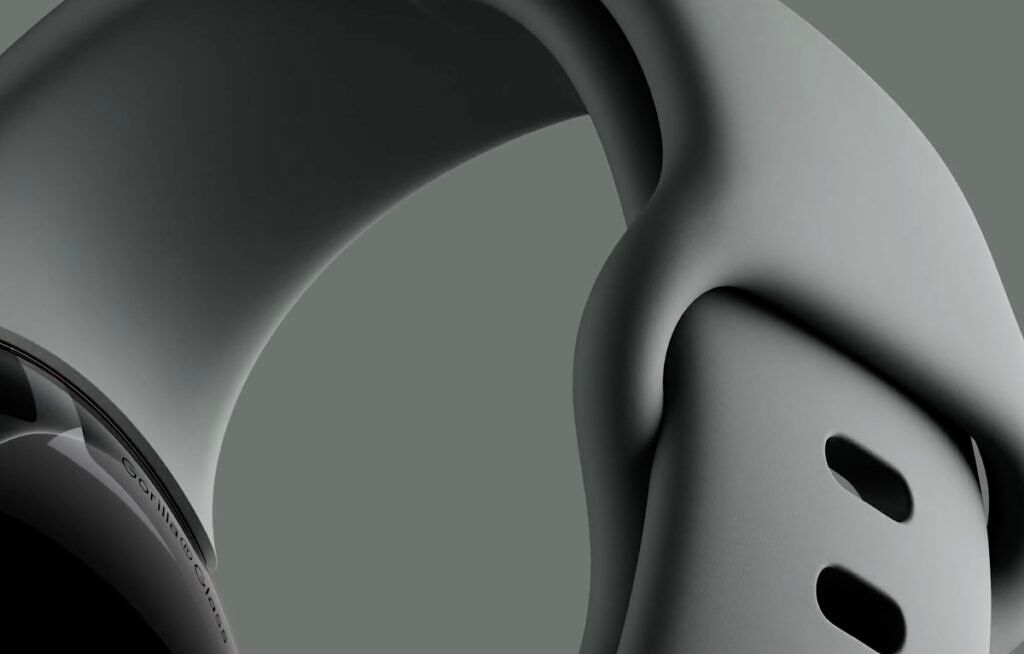
Google Pixel Watch case back close up showing Gorilla Glass branding.

Another interesting tidbit revealed in the video is that the Pixel Watch will feature Gorilla Glass protection. A close-up shot of the case back clearly shows Gorilla Glass branding, but it doesn’t confirm the variety of Gorilla Glass used.

Although the video doesn’t reveal any details about the Pixel Watch’s hardware specifications, recent leaks suggest that the Pixel Watch could pack the Exynos 9110 chipset, a 300mAh battery, and LTE support. We’ve also learned that Google will offer a host of first-party bands and straps for the watch and a wireless charger with a USB-C cable.

What do you think of the Pixel Watch’s design? Do you like the seamless case and the proprietary twist-lock strap mechanism? Let us know in the comments section below.

The post New Pixel Watch teaser showcases its unique twist-lock strap mechanism, confirms Gorilla Glass protection appeared first on XDA.


from XDA https://ift.tt/ndip6gF
via IFTTT

jeudi 22 septembre 2022

What is AV1 and why does it matter for the Google Chromecast HD?

If you’ve been following any of the leaks surrounding the upcoming Google Chromecast HD, you may have seen a lot of excitement around rumored support for the AV1 codec. While it is indeed a pretty big step forward from codecs like H264 and VP9, there’s a lot more to the story than that. AV1, also known as AOMedia Video 1, was first released in March of 2018, and it’s been a slow road in its adoption across the industry. This is the entire story of AV1, how it improves over VP9 and H.264, and why it’s a big deal.

What is AV1?

AV1 is a codec developed by the Alliance for Open Media, a conglomerate of a ton of different companies in the technology space. Its main benefits are that it’s royalty-free (so, companies can implement it in their software for free), and it has some immense savings over the likes of VP9 and H264. Facebook Engineering conducted tests in 2018, concluding that the AV1 reference encoder achieved 34%, 46.2%, and 50.3% higher data compression than libvpx-vp9, x264 High profile, and x264 Main profile, respectively. This means that for those on slower connections, you may be able to enjoy a quality higher than what you’re used to, and for those on faster connections, you’ll be able to get an even higher bitrate on the same connection speed.

The first smartphone chipset to support AV1 decode was the MediaTek Dimenisty 1000, which supported up to 4K 60 FPS. The Nvidia Geforce 3000 series supported decoding, the new Nvidia Geforce 4000 series supports both encoding and decoding, and Samsung’s Exynos 2100/2200 both support AV1 decode as well. Support is slowly growing in the industry, and the chipset purported to be in the Chromecast HD also supports AV1 decode, too. That doesn’t mean Google will implement support for it, but it’s looking likely. For people on limited connections, that’s an upgrade over VP9 and H264.

Not only that, but YouTube on desktop also supports AV1, and you can enable it in your account settings so long as you’re using a compatible browser. In fact, the company has designed its own silicon for the encoding of AV1 video that will be used in data centers for YouTube. The chip, code-named “Argos”, is a second-gen Video (trans) Coding Unit (VCU) that converts videos uploaded to the platform to various compression formats and optimizes them for different screen sizes. Google claims that its new Argos VCU can handle videos 20-33 times more efficiently than conventional servers.

The history of AV1

The context behind AV1 and why it was created is important as well. VP9 is a royalty-free codec developed by Google that anyone can use, and because it’s royalty-free, it could be implemented on any platform or service that wanted it. YouTube made use of the codec on any device that could support it (as that meant big savings for Google thanks to reduced bandwidth), and it has even been adopted by video-on-demand services such as Netflix, Twitch, and Vimeo.

However, because Google has a vested interest in adopting better compression algorithms to reduce the bandwidth usage of its data centers, it began to work on VP10 — the successor to VP9. A tiny increase in video compression per video can result in huge cost savings and a major improvement in user experience when you’re accounting for billions of video minutes. Google announced that they planned to release VP10 in 2016, and then would release an update every 18 months to ensure a steady progression. It got to the point where Google even started to release code for VP10, but the company announced the cancellation of VP10 and formed the Alliance for Open Media (AOMedia) instead.

The Alliance for Open Media includes everyone from processor designers (AMD, Arm, Broadcom, Chips&Media, Intel, Nvidia) to browser developers (Google, Microsoft, and Mozilla), to streaming and videoconferencing services (Adobe, Amazon, BBC R&D, Cisco, Netflix, Youtube). All of these companies have been offering up some form of support to AV1, be it through hardware decoders introduced in chipsets, the implementation of decoders in browsers, or the use of the codec on streaming services.

AV1 versus HEVC/H265

The biggest difference between AV1 and HEVC (High-Efficiency Video Coding), also known as H.265, is in the licensing. In order to ship a product with HEVC support, you need to acquire licenses from at least four patent pools (MPEG LA, HEVC Advance, Technicolor, and Velos Media) as well as numerous other companies, many of which do not offer standard licensing terms — instead requiring you to negotiate terms.

These steep royalties were already problematic for products like Google Chrome, Opera, Netflix, Amazon Video, Cisco WebEx Connect, Skype, and others, and they completely exclude HEVC as an option for projects like Mozilla Firefox. This is because it goes against multiple core values of the Firefox project: Firefox needs to be royalty-free in order to ship in many FOSS projects, which HEVC usage would prevent it from being; and Mozilla believes in a free and open web, and that isn’t possible if you promote patent-encumbered standards. Even ignoring those two problems, Mozilla simply cannot afford to waste hundreds of millions of dollars on royalties and all that time negotiating the necessary licensing agreements.

A fun fact as well, these same problems are what prevented Firefox (and Chromium) from even including native H.264 playback on many platforms until a couple of years ago… and it still requires a plugin on Linux. It’s unlikely that Firefox will even be able to support HEVC before its patents expire in the 2030s (or possibly even later). Even to this day, Firefox only supports H.264 natively thanks to Cisco offering to pay all of the licensing costs for Mozilla through OpenH264, in order to standardize H.264 for streaming across the market until the next generation codec was ready. On the Mozilla video codec guide, the company says that “Mozilla will not support HEVC while it is encumbered by patents.” To this day, only Edge and Internet Explorer support native HEVC playback, and only on specific hardware that supports decoding.

In efficiency terms, both codecs go toe-to-toe against each other. Their efficiency is generally on-par with each other (though tests have shown AV1 to edge slightly ahead), but there’s a catch — AV1 typically takes significantly longer to encode, thanks to the lack of hardware encoding capabilities. The University of Waterloo found in 2020 that while AV1 offered a bitrate saving of 9.5% when compared to HEVC in encoding a 4K video, AV1 videos also took 590-times longer to encode than AVC. In contrast, HEVC took only 4.2-times longer. These tests were obviously run quite early on in AV1’s lifespan when hardware support wasn’t really available.

The future of AV1

It’s looking likely that AV1 will blaze the trail for high-quality compressed video playback, as more and more devices support hardware decoding. Given that HEVC is only supported by one browser on desktop (now that Internet Explorer is dead, anyway), AV1 is clearly the go-to codec for the future as a VP9 successor. With support only expected to grow, more and more devices are going to end up using it. There are already some experiment flags referring to AV2 on the AOM repository and a “starting anchor for AV2 research” that was committed to the repository last year, which suggests that we’ll see iterations in the future as well.

Why does AV1 matter for the Google Chromecast HD?

If you’re looking to pick up the Google Chromecast HD, there’s one big reason why you might care about AV1 — and that’s your network capabilities. If you’re buying the HD version instead of the 4K version, there are likely a couple of reasons why you would do that, and one of them may be that your internet does not have the bandwidth for 4K streaming. If that is the case, then you’re likely to be bandwidth-conscious anyway, and AV1 means that you can get higher bitrate video out of your Chromecast. This will lead to better video quality overall at the same data rates that your internet already supports.

    Chromecast with Google TV (HD)
    The Chromecast with Google TV (HD) is a cheaper Chromecast that can only do 1080p playback, but for a lot of people, that's all you need.

Not only that, though, and this is an arguably even bigger reason, it’s the first really mainstream TV dongle that could actively support AV1. Roku is mainstream to a certain degree but harder to get in some regions, and the Fire TV Stick 4K Max is the only other option currently. Google’s ecosystem for its TV dongles is by far the most fleshed out of any of them, and the inclusion of AV1 is a pretty big deal for that reason, too. It legitimizes it as an option, and may push other companies to support AV1 in other ways, too.

The post What is AV1 and why does it matter for the Google Chromecast HD? appeared first on XDA.


from XDA https://ift.tt/lC6xYRc
via IFTTT

These are the best Apple iPad Mini 6 cases to buy in 2022

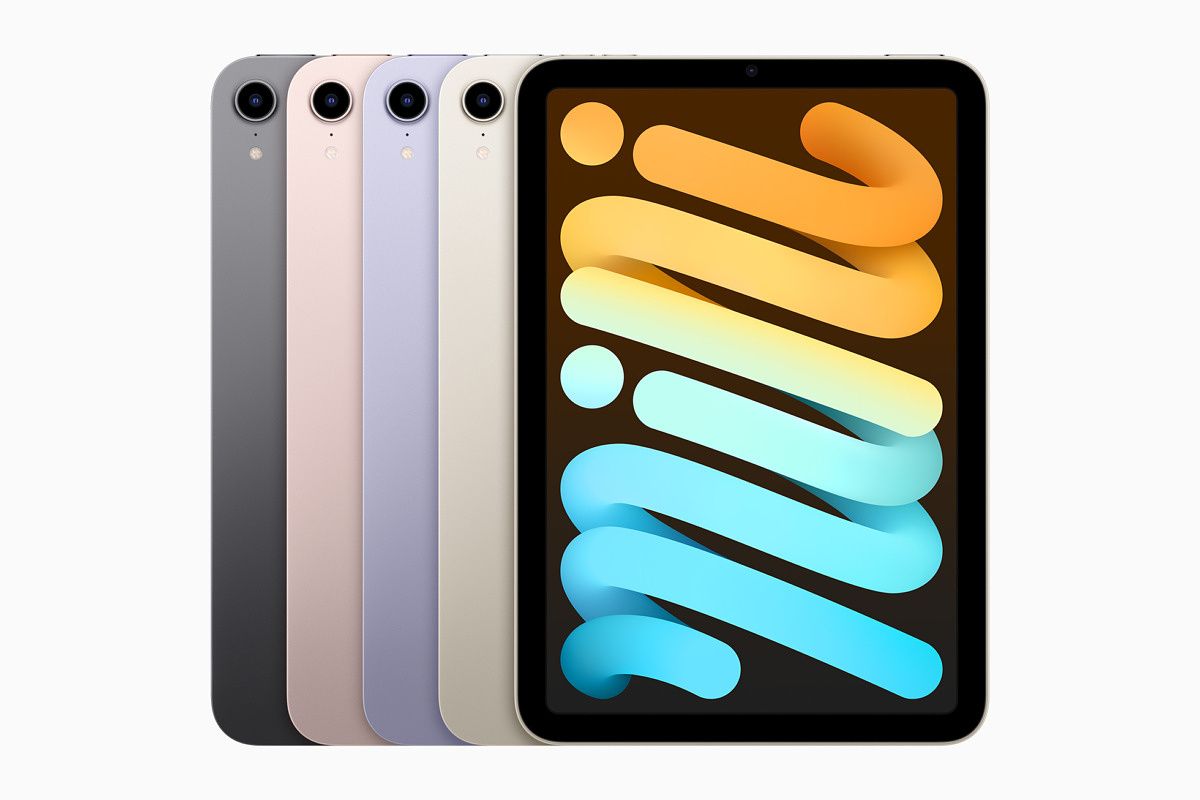
Apple announced the iPad Mini 6, along with the iPhone 13 lineup and iPad 9 during its California Streaming event in 2021. This iPad Mini comes with a complete redesign, inspired by that of the newer iPad Pro models, in addition to new colors. It has no physical home button and moves the Touch ID scanner to the Power button. If you haven’t yet bought it, do check out the best iPad Mini 6 deals. A compact yet powerful slab deserves to remain as shiny as the day you bought it. Scratches and cracks would simply ruin its clean aesthetic. So we have compiled for you a list of the best iPad Mini 6 cases to help minimize the damage in potential accidents.

Some of these cases, such as the rugged ones, can deter more damage, while other ones offer weaker protection to retain a minimalistic, clean design. What you sacrifice for the sake of the other aspect is up to you. However, you should be able to find a balance between both characteristics in some of the cases we are listing below. Ultimately, having a case on, no matter how light it is, is still infinitely better than not having any form of protection for your new iPad.

    Spigen Rugged Armor

    Rugged

    This rugged case from Spigen will offer significant protection for your iPad Mini 6, especially around the edges. It has an Air Cushion Technology that instantly absorbs shock in every drop.
    SUPCASE Unicorn Beetle Pro Series Case

    With Screen Protector

    This rugged case from SUPCASE comes with a built-in screen protector, so your iPad Mini 6 is safer on a 360º level.

    Promoted

    ESR Hybrid Case

    Affordable

    This affordable case from ESR protects your new iPad Mini 6 without messing with your budget. It's slim, hard, and transparent, keeping the signature design of your premium iPad in the spotlight.
    Ztotop Premium Leather Folio Stand

    Leather

    This premium stand from Ztotop blends protection with professionalism. It offers a very formal style, in addition to 360º protection and automatic iPad screen wake/sleep, thanks to its internal magnets.
    i-Blason Cosmo Case

    Sophisticated

    This trifold stand from i-Blason comes in two sophisticated patterns — Marble and Ocean. It has a protective front cover with a built-in screen protector that prevents scratches without compromising sensitivity.

    Promoted

    Bokeer Hard Translucent Frosted Back Case

    Hard

    This case from Bokeer offers a hard build with a translucent back. This allows your iPad to retain some of its unique identity, while protecting it from shocks and scratches.

Personally, if I had to choose one of these cases for my iPad Mini 6, I would go for the ESR Hybrid Case. I love how simple it looks. Its transparency makes it almost invisible while offering basic protection for my new device. So the iPad stays front and center, and potential drops won’t be as damaging, since it’s shock-resistant.

If you’d rather have a keyboard case or are interested in a standalone Bluetooth keyboard for your new iPad Mini 6, do check out our recommendations.

    Apple iPad Mini 6
    The iPad Mini 6 is the 2021 compact iPad from Apple. It is powered by the A15 Bionic chip and supports the Apple Pencil 2.

Have you bought an iPad Mini 6, or are you considering buying one? Did you go for one of the cases we recommend? Why or why not? Let us know in the comments section below.

The post These are the best Apple iPad Mini 6 cases to buy in 2022 appeared first on XDA.


from XDA https://ift.tt/9p30mXD
via IFTTT

These are the best Apple iPad 9 (2021) deals in 2022

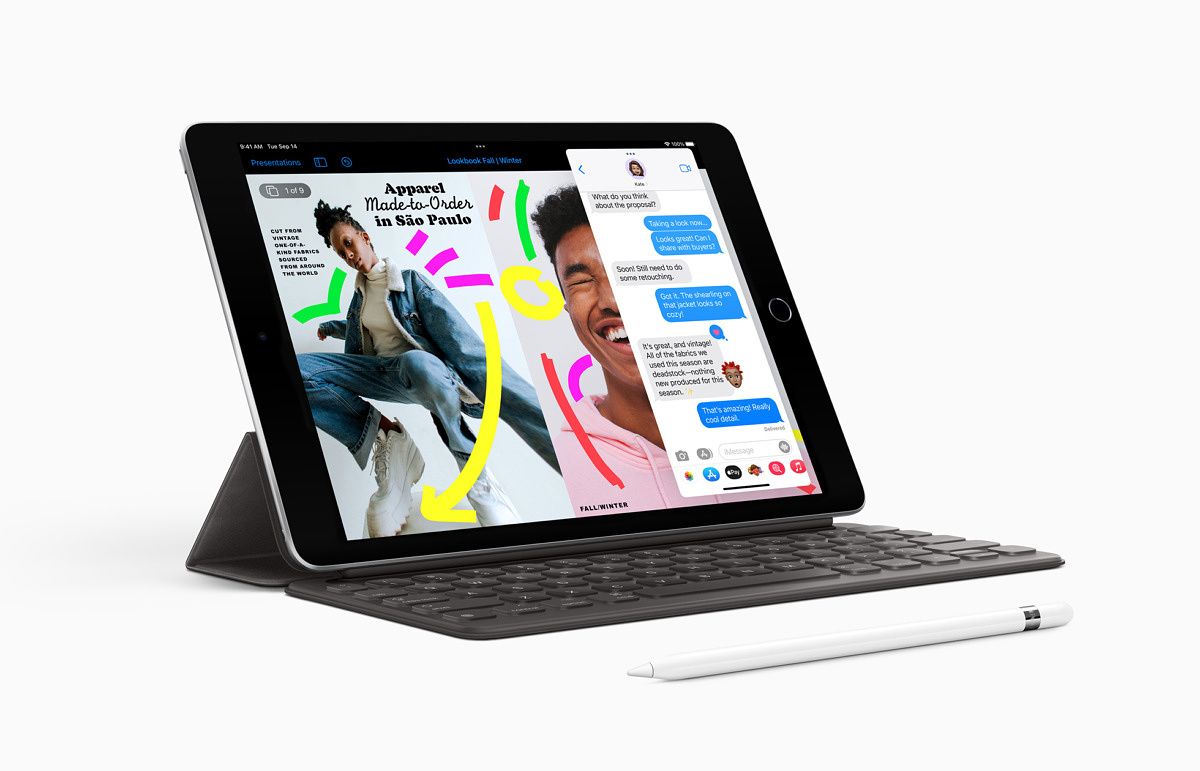
An upgraded and budget-friendly iPad is here! On September 24, 2021, Apple revealed the iPad 9. This iPad category is usually the students’ go-to, considering its affordability and versatility. After all, it supports Apple Pencil and external keyboards, which turns it into a multipurpose device. While Apple offers a student discount on the iPad, not all students have access to that. So here’s a list of sources where you can get the iPad 9 from, with some tempting deals included, which make this purchase such a steal!

How much does the iPad 9 cost?

This iPad is priced at $329 for the entry model in the U.S. It has been available since September 24, 2021. Below is a full breakdown of the different variants of the iPad 9 and their respective prices at the Apple Store.

Variant Regular Student Discount
Wi-Fi, 64GB $329 $309
Wi-Fi + Cellular, 64GB $459 $439
Wi-Fi, 256GB $479 $459
Wi-Fi + Cellular, 256GB $609 $589

Best iPad 9 deals

Apple Online Store

The Apple Online Store has a few perks you might not necessarily find elsewhere:

  • Student discounts and deals — if you’re eligible.
  • Trading in an old iPad for up to $580 off your next Apple purchase.
  • Get a gift card worth up to $200 if you buy a cellular model and activate it on a certain US carrier.
  • Get a free engraving on the back of your iPad.

You can already purchase the iPad 9 through the Apple Online Store. If you’re a college student, you may be eligible for a discount.

    Apple iPad 9
    The iPad 9 is the 2021 affordable iPad from Apple. It is powered by the A13 Bionic chip and supports the Apple Pencil 1.

Amazon

Amazon matches the price that you see on the Apple Store — $329 for the starting model.

    Apple iPad 9
    The iPad 9 is the 2021 affordable iPad from Apple. It is powered by the A13 Bionic chip and supports the Apple Pencil 1.

Best Buy

Best Buy currently has the 2021 iPad available for purchase. Its price matches that of the Apple store — $329 for the entry model.

    Apple iPad 9
    The iPad 9 is the 2021 affordable iPad from Apple. It is powered by the A13 Bionic chip and supports the Apple Pencil 1.

Adorama

Adorama also matches the price tag on the Apple Store, and you can buy the 2021 affordable iPad for $329 only.

    Apple iPad 9
    The iPad 9 is the 2021 affordable iPad from Apple. It is powered by the A13 Bionic chip and supports the Apple Pencil 1.

B&H

If this is the retailer of your choice, you can get the iPad 9 for $329 as well.

    Apple iPad 9
    The iPad 9 is the 2021 affordable iPad from Apple. It is powered by the A13 Bionic chip and supports the Apple Pencil 1.

Walmart

Walmart currently has the entry model available for purchase at just $299. That’s one of the biggest discounts we’ve seen for the 2021 iPad so far. This deal includes free shipping, so it’ll arrive right at your doorstep for just $299.

    Apple iPad 9
    The iPad 9 is the 2021 affordable iPad from Apple. It is powered by the A13 Bionic chip and supports the Apple Pencil 1.

Staples

Staples is selling the 256GB model for $499 only. You can buy it from here if you prefer it over other retailers.

    Apple iPad 9
    The iPad 9 is the 2021 affordable iPad from Apple. It is powered by the A13 Bionic chip and supports the Apple Pencil 1.

Newegg

This retailer is selling the 2021 affordable iPad for $439. If you can’t find it anywhere else and are willing to pay extra to get your hands on it, you can buy it here.

    Apple iPad 9
    The iPad 9 is the 2021 affordable iPad from Apple. It is powered by the A13 Bionic chip and supports the Apple Pencil 1.

These are the currently available deals on the 2021 iPad 9. We will keep this page updated as more deals surface online. Make sure to check back later for more. If you’re interested in the iPhone 14, you may want to take a look at the currently available deals for the iPhone 14.

The post These are the best Apple iPad 9 (2021) deals in 2022 appeared first on XDA.


from XDA https://ift.tt/mrkEq0W
via IFTTT

You can buy the new Chromecast with Google TV (HD) already, here’s how

We’ve been seeing a ton of leaks surrounding Google’s upcoming Chromecast device over the past few weeks. These leaks have revealed that the Chromecast with Google TV (HD) will likely ship with Google TV based on Android 12 and feature an Amlogic S805X2 SoC paired with 1.5GB RAM. We also learned that the streaming dongle will feature the same design as the 4K model and go on sale for around $40 in the U.S. While Google hasn’t officially announced it yet, you can already buy one right now if you live in the United States through Best Buy, and it’s actually a little bit cheaper coming in at $29.99.

    Chromecast with Google TV (HD)
    The Chromecast with Google TV (HD) is a cheaper Chromecast that can only do 1080p playback, but for a lot of people, that's all you need.

While we would typically advise that purchasing ahead of release isn’t a good idea, given that it’s on Best Buy, this would appear to be the real deal. We’re expecting that Google will unveil the Chromecast with Google TV any day now, especially as a training video for retail workers was also posted by accident on Google’s YouTube channel. Best Buy offers both curbside pickup from today if you want to try your luck, and it also offers delivery, too.

Judging from the retail training video, it appears that Google’s Chromecast with Google TV (HD) will have all of the same features as the 4K model, though obviously sans 4K. It includes support for all of your favorite Android TV apps, HDR, and Google Assistant. You also get the dongle itself, a remote, a power cable, an adapter, and AAA batteries for the remote in the box, and all you need to do is connect it up to your TV and you’re ready to go. It supports 1080p 60 FPS right out of the box and only takes a few minutes to set up.

As for pricing, while it costs $29 in the U.S, we also know that it comes in at £34.99 in the U.K. and somewhere around €40 in Europe.


The post You can buy the new Chromecast with Google TV (HD) already, here’s how appeared first on XDA.


from XDA https://ift.tt/1IMq8nw
via IFTTT

Google showcases the Chromecast with Google TV (HD) in retail training video ahead of launch

Over the last few days, we’ve covered various leaks about the new Chromecast with Google TV (HD). The leaks have revealed pretty much everything about the streaming dongle, from the familiar design to its hardware specifications. Although Google still hasn’t officially announced the device, the company has now shared a retail training video revealing all the details.

Google shared the video through the Google Retail Training UK YouTube channel to introduce retail sales and call center staff to the new Chromecast with Google TV (HD). However, the company apparently published the video unintentionally, as it promptly removed it after it was shared on Twitter. Nevertheless, we watched the video before Google took it down, and here’s everything we learned.

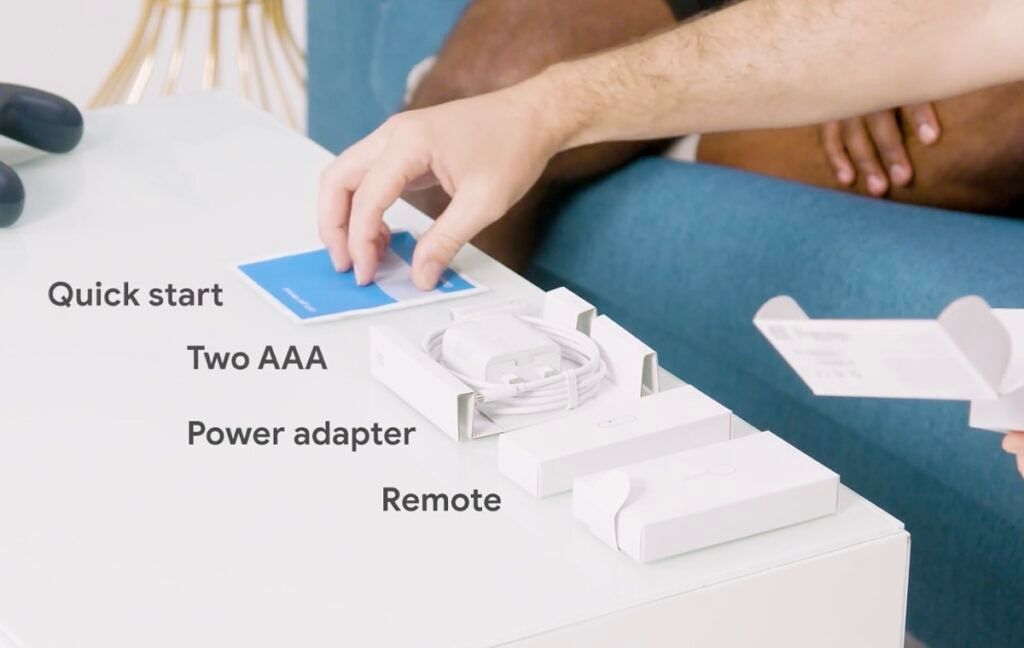
The video first reveals everything you’ll get inside the box when you purchase the device, which includes the dongle itself, a remote, a power adapter, two AAA batteries, and some paperwork.

Chromecast with Google TV (HD) training video screenshot showing box contents.

It then highlights the Chromecast with Google TV (HD) setup process, revealing the device, and goes through all the features on offer, including 1080p 60FPS video output, personalized recommendations, a watchlist, voice input with the Google Assistant, and more. On the software front, the new Chromecast with Google TV (HD) appears to offer all the features available on the 4K model.

Screenshot from Chromecast with Google TV (HD) training video showing the device.

Lastly, the video confirms that the Chromecast with Google TV (HD) will launch at £34.99 in the U.K. (~$40). Sadly, it doesn’t share any details regarding its availability.

Screenshot from Chromecast with Google TV (HD) retail training video with pricing details.

While we still don’t have the official pricing and availability details for the U.S., we don’t think Google will wait until its upcoming hardware launch event to make an official announcement, especially since we now know everything about the device.

What do you think of the new Chromecast with Google TV (HD)? Let us know in the comments section below.


Source: Google Retail Training UK (Removed)

The post Google showcases the Chromecast with Google TV (HD) in retail training video ahead of launch appeared first on XDA.


from XDA https://ift.tt/2QefRDZ
via IFTTT