As a device that will be strapped to your wrist all the time, the Apple Watch Series 8 is probably going to come in contact with water and sweat. Thankfully, the smartwatch comes with a water resistance rating. Here’s what you need to know.
With a WR50 rating, the new Apple Watch Series 8 is water resistant up to a depth of 50 meters. That means you have nothing to worry about sweat exposure, water splashes, or rain damaging your smartwatch. In addition, Apple also advertises the Wath Series 8 as swim-proof. However, there are some caveats that you need to be aware of. Apple says that you can only use the smartwatch for shallow-water activities like swimming in a pool or ocean. The company doesn’t recommend wearing the watch while participating in high-speed water sports such as scuba diving, water skiing, or other activities involving high-velocity water. If you want better water protection, check out the Apple Watch Ultra, which offers a water resistance rating of 100 meters and can be used for recreational scuba diving and high-speed water sports.
You should also note that the Apple Watch Series 8 is only water resistant to fresh water. In other words, avoid exposing it to soapy water, shampoos, strong chemicals, and other strong corrosive liquids. In addition to the water resistance, the Apple Watch Series 8 is also rated IP6X dust resistant.
The Apple Watch Series 8 brings many notable upgrades to the table. It debuts a new temperature sensor that provides new insights into women’s health and two new motion sensors for the Crash Detection feature. In addition, the new model also offers faster charging, a new Low Power Mode for improved battery life, and international roaming support (cellular models). If you’re looking to buy one, be sure to check out the best Apple Watch Series 8 deals to save some cash.
It’s almost as though everyone is a creator these days. If you’re like me, you’re creating new memories by tweeting, web browsing, and reading articles. You might even create fun moments when watching movies, editing family videos on your laptop, or even gaming with friends.
That’s exactly the kind of stuff that I feel the new HP Envy 16 is for. This laptop, which follows last year’s HP Envy 15.6, is mainly targeted at creators like video editors or photographers. Yet, it also has a little bit of everything that the everyday person might want in a laptop for gaming, productivity, and consuming content.
That’s all thanks to the amazing set of specs that HP configured this Envy 16 review unit with. It’s the latest 12th generation Intel Core i7-12700-H processor, 16GB of RAM, Nvidia RTX 3060 graphics, and a 1 TB SSD. On top of all that, I can’t forget the amazing 16-inch 3840 x 2400 resolution OLED touch display, either.
Despite very important refinements like a better 5MP webcam and a switch to the 16:10 aspect ratio display, there are some tiny flaws, too. Those include below-average battery life, as well as the system sounding a little too loud under heavy loads. But this is definitely one of the best HP Envy laptops in a while, with meaningful generational changes that finally make it worth buying over some of the best mainstream HP laptops.
The HP Envy 16 packs a lot for creators and the everyday user, too. OLED displays, powerful RTX graphics, Intel H-class processors make it a great buy.
The HP Envy 16 is available at HP.com, Best Buy, Costco, and Micro Center. Prices start at $1,400.
HP is selling the Envy 16 at a variety of retailers. Certain configurations might not be in stock, depending on where you look. The lower-end version of the HP Envy 16 starts at $1,400, on HP.com. That’ll get you the 12th Generation Intel Core i5 H-series processor, Intel A370M Arc graphics, a standard 16-inch UHD+ display with 120Hz refresh rate, 16GB RAM, and a 512GB SSD. It’s often marked down on the HP site for $1,180.
The model HP sent to me is usually priced at $1,809, but it’s currently on sale for $1,700. As I mentioned at the top of the review, that includes a 12th generation Intel Core i7-12700-H processor, 16GB of RAM, Nvidia RTX 3060 graphics, and a 1 TB SSD. The display is also bumped up to 3840 x 2400 resolution OLED in my case.
If you really want a lot of power, you can bump the specs on this machine all the way up to a Core i9-12900H processor, with Nvidia RTX 3060 graphics, 32GB of RAM, a 2TB SSD, and a WQXGA 120Hz panel. That’ll set you aside $2,600 or $2,380 when on sale.
5MP HP True Vision camera with Windows Hello and temporal noise reduction and dual array digital microphones
Audio
Audio by B&O, quad speakers, HP Audio Boost
Input
Full size, backlit, natural silver keyboard
HP Imagepad with multi-touch gestures
Color
Natural Silver
Material
Aluminum
OS
Windows 11 Home
Price as reviewed
$1,809
Design: Heavy, but lots of ports
The HP Envy 16 looks like your typical aluminum laptop, coming in just one Natural Silver color, but it’s quite heavy
Smaller design tweaks between generations help with ventilation and cooling
It has a lot of ports
If you’re spending well over $1,000 on a laptop like this one, then you want premium quality. You don’t want to feel plastic or cheap materials. You want to be satisfied with your purchase and use it with pride. That’s exactly what you get with the HP Envy 16.
Like some of the HP devices on the Spectre and the mainstream Pavillion line, this laptop is built tough. It’s made out of aluminum. There’s no flexing and bending to deal with, even when I pressed hard on the keyboard deck and pulled on the screen. I sure see this laptop standing up against time. What’s even better is that the lid opens with one hand, I’ve had issues with this on other bigger laptops in the past.
HP also made some interesting generational design choices to help with the cooling of the laptop. The bottom of the chassis is extended out a bit for better airflow. Rubber feet also elevate the laptop to slant it a bit to help with cooling, and dual air vents can intake and exhaust. I found that these features help ensure great airflow so that your desk doesn’t get hot when the laptop is in use.
As I’ll get into later though, between last generations HP Envy 15.6 and this year’s HP Envy 16, HP tweaked the display to a 16:10 aspect ratio. That means a bigger display, and a taller, less wide laptop. It doesn’t help with the overall weight though. This laptop is still heavy. I moved around with it in-between various rooms in my house, and I really feel the weight difference over my typical device, the Surface Laptop Studio. If you compare the two, the weight of the HP is nearly 1 pound more than my Surface.
One thing that’s great with this 16-inch form factor, is the ports. It leaves HP room lots of room on the side of the chassis for them. On the left, there’s a USB-A port (it’s the drop-down type,) a headphone jack, and a microSD card slot. The right has HDMI, a standard USB-A, and two Thunderbolt 4 USB-C.
For creators or even those who like connecting to monitors, this is great. Even everyday people who aren’t creators might still use USB-A accessories like a mouse or a USB drive. The important thing though is that you can connect to more displays this way without the use of docks. Plug one into the HDMI port, and another two into the Thunderbolt 4 USB-C ports, and you’re good to go. Those other USB-A ports will still be free for accessories.
Display: Beautiful OLED 16:10
The 16-inch OLED display is immersive and comes in a new 16:10 aspect ratio
The top of the display has an improved 5MP webcam
I can name a lot of laptops with OLED displays, and we even have a list for them. So, it’s great to see that HP is again including an OLED option on the Envy 16. Last year’s Envy 15.6 inch had one too so it isn’t new, but there is one thing that’s fresh on this year’s model. With a new switch to the 16:10 aspect ratio on the Envy 16, there’s more room to see stuff, and the content looks extra beautiful.
It goes back to what I said at the top of the review, creative types and everyday people can benefit from OLED displays. Content just looks so much more vibrant and alive than on a traditional laptop with an LCD panel. You’ll want to work on his laptop every day, just like I did. On laptops, OLED displays like this one mean you can get truer to-life blacks and more lively colors.
This doesn’t mean much when the laptop has ugly thick bezels, though, as that ruins the overall immersive feeling. So, with the switch from 16:9 to the 16:10 aspect ratio this year, HP is able to cut the ugly bottom chin on the display out and make the display taller. That adds up and makes things feel better. So much better that you get 11% more vertical room for your content.
In my case, when I was web browsing, webpages came alive thanks to the OLED display. On the XDA website, for example, I noticed more purple color in the XDA header logo. Even while writing this post, the black text looked more vibrant against the white background. And let me not forget media. I watched New York Mets baseball games on this HP Envy, and boy, from the color of the grass to the blue in the Mets’ home uniform, I felt like I was at the ballpark myself.
The numbers I hit in my colorimeter testing will back that. The Envy’s display hits 100% of the sRGB spectrum, 97% of the AdobeRGB spectrum, 92% of the P3 Gamut, and 92% of the NTSC gamut. For creatives who need the best color accuracy in Photoshop and other apps, these are great numbers for an OLED screen. You get really accurate colors to ensure your content looks just as you intended.
The OLED display makes you feel like you're there.
I just wish that 120Hz was an option on the OLED panel, though. But I think HP makes up for that with the HP Display Control. You can manually switch to a display mode optimized for color vibrancy, web, Adobe RGB, DCI-PC, or stick to native. Auto Color mode will also switch the mode based on the application. It’s great to see HP give options for how you’ll be using the display.
As for what’s at the top of the display, HP’s now includes a 5MP Windows Hello webcam. The Fingerprint reader from last year’s Envy 15.6 is gone in favor of this. Most laptops have 1080p webcams, so it’s great to see HP move beyond the basics. Creative types using this device will spend a lot of time on calls with clients, or even friends and family.
Coming from a Surface Laptop Studio, I really noticed the difference in quality, my face looked so much brighter, and did the room behind me when I fired up this webcam. It can get even better, too, thanks to the HP-enhanced lighting app, which can create effects for you. Or, HP Auto Frame, which keeps you in the camera frame.
Keyboard and trackpad: Good to type up a storm & scroll with
The chicklet-style keyboard is comfy and adds a new emoji button on the F1 key
The trackpad is large and accurate
I always write my reviews on the actual laptops I am reviewing. In this case, I am glad I did on the HP Envy 16. The chicklet-style keyboard is quite comfortable. As I jammed my way through this post, I got great feedback, as the keys softly retract into the chassis when typing. Since this is a 16-inch laptop. the plastic keycaps themselves are pretty big, too, allowing for good travel.
One new addition on the keyboard this year is the emoji button on the F1 key. It helped me choose emojis when messaging my colleagues in Slack, though I’m not sure everyone will need it that much. And yes, a loss this year is the fingerprint reader on the keyboard. HP opts for Windows Hello instead. The mute microphone and camera shutter buttons are still there, though.
As for the trackpad, it is centered directly in the middle of the laptop. It’s fairly large, too. I didn’t have issues with accidental touches on the trackpad when typing. I like how soft the trackpad feels when clicked. Some other laptops like the older XPS models have a trackpad with harsher feedback. The surface has a nice coating to it that makes it easy to scroll with fingers.
You might also notice the speakers next to the keyboard. HP’s jumped to Quad Speakers this generation, whereas last year, it was stereo speakers. This helps bring movies and TV shows alive with richer bass and room-filling sounds.
Performance: Intel H-class CPUs and RTX graphics win, but not for battery
The HP Envy 16 comes with options for Intel’s H-class processors paired with Intel Arc or Nvidia RTX 3060 graphics
Battery life is bad because of the 45-watt CPU and power-hungry Nvidia GPU
The processing power of the HP Envy 16 is a lot to wrap your mind around. I have a Core i7-12700H model which has 14 cores (6 performance and 8 efficient), 20 threads, and can boost up to 4.7 GHz. HP also offers an insane model with the Intel Core i9-12900H CPU. This has the same number of cores and threads as the Core i7 model but a higher 5.00 GHz turbo boost. I honestly don’t see why you’d want to upgrade for that reason, except if you want to get more multi-core performance.
Both these CPUs operate at 45 watts, which adds to my doubts about the Core i9 model. HP is also making the jump in faster RAM and Storage between HP Envy generations, too. This new model uses the faster PCIe Gen 4 spec and faster GDDR5 RAM. It’s a difference to feel when it comes to more demanding tasks, that we get into next.
The model that I have with the Core i7 and RTX graphics is a stunner for performance. In writing this review, I had about 20 tabs open in Microsoft Edge, I was connected up to a 4K monitor and the laptop didn’t slow down Other than that, since this laptop has a dedicated GPU, I did fire up some games to try out. As my colleague noted in his HP Pavillion Plus review, Intel H-class processors perform better with dedicated graphics.
The HP Envy 16 is a stunner for performance.
HP is clear that this isn’t a gaming laptop. It’s intended as a content creation machine for apps like Photoshop or video editors like Adobe Premiere Pro. Yet with RTX graphics, you can still play games if you want. You’ll get good results close to an actual gaming laptop. Even actual video or photo editing should work better than you’d expect, based on the Cinebench, Crossmark, and 3D Mark scores. These are all on a gaming laptop level and I am comparing this device, too. On all of our tests that stress the CPU as well as the GPU, you can see that it lines up with another creator-first laptop, the XPS 17, which is configured almost the same as this unit.
I played three games on my machine, and all ran smoothly at native resolution. Microsoft Flight Simulator was set to the highest possible settings and I still hit close to 30 frames per second on the native resolution. Forza Horizon 5 also performed the same on similar settings. Even Grand Theft Auto V performed well without lag.
Overall, this is one well-performing machine but all that power comes with poor battery life. I only got to around 4 and a half hours of battery life in my tests of running through my days of work of video calls, web browsing, YouTube watching, and other productivity tasks. Plugged into a monitor, that went down to 3 hours. The OLED screen is very power-hungry. With the display pulled down to 38% brightness, and Windows set to Balanced I only lasted from 12:00 PM to 6:00 PM and had to plug back in by the end of the day. You should not have to do that, and this is a laptop where you’ll have to be close to the charger.
The other downside is fan noise. While the fan blades are 33% lighter this year, and HP added 6 more blades than last year’s model, they’re still pretty audible. During prolonged periods of use under regular loads. the fans kick in to cool down the keyboard deck and sides of the laptop. It’s not crazy loud, but still annoying. You’ll definitely notice it more when gaming at a high resolution and high settings when they kick in at near full speeds.
Should you buy the HP Envy?
The HP Envy 16 is a great laptop for content creators, or anyone looking for an all-rounder laptop.
Who should buy the HP Envy 16
Content creators who are into video editing or photo editing
You want a laptop with RTX graphics and an OLED display
Who should not buy the HP Envy 16
Creators that need a laptop with good battery life
Overall, the HP Envy 16 is a great laptop with a fantastic display and great power. Just the battery life holds it back from being perfect, and for that, you might want to consider a Spectre, or an HP OMEN gaming laptop instead.
The HP Envy 16 packs a lot for creators and the everyday user, too. OLED displays, powerful RTX graphics, Intel H-class processors make it a great buy.
As an Android app developer, there are many reasons why you might want to utilize an abuse detection mechanism to examine the target device’s software and hardware environment. Google’s SafetyNet Attestation API is one such anti-abuse API that allows app developers to assess the Android device their app is running on. However, it will be deprecated by 2024 in favor of the Play Integrity API. Naturally, the modding community will soon need a practical and easy-to-use method to query Google Play Services about the device integrity properties. This is where Play Integrity API Checker comes in.
Created by Nikolas Spiridakis, aka XDA Senior Member 1nikolas, Play Integrity API Checker is a nifty app to determine the device integrity status as reported by Google Play Services. After installing, all you need to do is hit the CHECK button and the app will do the rest. The developer embraced the KISS principle (“Keep It Simple Stupid”), which is apparent from the UI design language.
Fortunately, the device integrity verdict mapping between the SafetyNet Attestation API and the Play Integrity API is fairly straightforward. In a nutshell, the “MEETS_BASIC_INTEGRITY” property of the latter is equivalent to the “basicIntegrity” attribute of SafetyNet. Add the “ctsProfileMatch” under basic evaluation on top of that and you will get the equivalent of “MEETS_DEVICE_INTEGRITY” in the new API. Finally, to get a green tick beside the “MEETS_STRONG_INTEGRITY” property, the device must satisfy the hardware-backed SafetyNet attestation.
Notably, a number of departure events from the stock configuration might lead to Play Integrity violations. On a modern Android device, an unlocked bootloader is enough to trip the abuse detection system. Keep in mind that the app won’t help you modify the Play Integrity status of your device — it merely reflects the status from the perspective of Google Play Services. However, power users can still use a variety of workarounds to pass Google’s SafetyNet attestation and similar anti-abuse checks without breaking any parts of the system.
If you want to give Play Integrity API Checker a try, download the app from the Google Play link below. For any app developers that read this, the app is open source, so you can take a look at the codebase, submit new patches, or compile the app yourself.
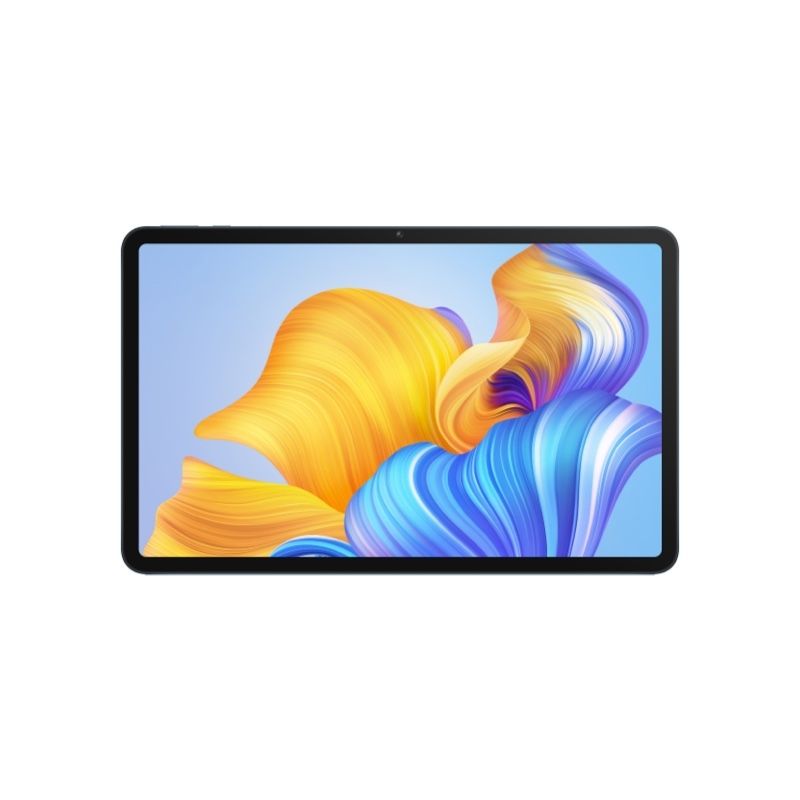
In the world of tablets, there aren’t a whole lot of options. You’ll pretty much only ever stray towards Samsung in the realm of Android or, more likely, an iPad. A lot of Android users will be swayed by the allure of an iPad, as Apple just simply does tablets better. However, the Honor Pad 8 is an interesting tablet that does it just a little bit differently. It’s geared a whole lot more towards media consumption but has a price tag to match, too.
If you need a tablet for watching videos, listening to music or controlling a smart home ecosystem, then this might be the tablet for you. It’s not the most powerful, so don’t expect productivity, but it’s got a great, large screen and some fantastic speakers. It’s a cheap device for watching your favorite movies, TV shows, or even YouTubers, and it does a great job at exactly that — much better than most of the competition in this price bracket.
What I love about the Honor Pad 8 is that it’s not trying to be anything more than a media consumption device. It’s great at what it’s designed to do, and it doesn’t try to shoehorn a ton of other stuff on top of that. If you want productivity, don’t get the Honor Pad 8. If you just want something to consume media on, then this is nearly as good as any tablet that’ll cost a good bit more.
The Honor Pad 8 is a media-focused tablet that does a great job on a budget. Want to watch TV shows, movies, or YouTube on an Android tablet? Get this.
The Honor Pad 8 is available for €329 on both Honor’s HiHonor website and on Amazon throughout Europe. If you live in the United Kingdom, it comes in at £269.99.
About this review: Honor sent me the Honor Pad 8 for review. The company did not have any any inputs into the contents of this review.
Honor Pad 8: Display and build
The Honor Pad 8 display is crisp, clear, and decently bright
The display is the most important part of the Honor Pad 8, and it’s something that the company has nailed pretty well here. It’s crisp, it’s clear, and it’s decently bright. It’s great for sitting back and watching Netflix or YouTube, and it was great for a recent trip to Berlin for IFA 2022 where I was able to sit down and watch something in downtime.
It’s not the most technically impressive display, and it does lack some features. For example, there’s no HDR support, and it’s an IPS panel instead of an OLED. While there is a debate to be had as to whether OLED or IPS is better for watching movies or TV shows, OLED is certainly better in most other scenarios. If you prefer an IPS panel for consuming media, then you’re not going to have a problem with this device.
The Honor Pad 8 does a fantastic job at packing what's necessary
For a cheap tablet based on media consumption, the Honor Pad 8 does a fantastic job at packing what’s necessary. The large display with a high resolution is the most important part of the entire ordeal, and the wider 5:3 aspect ratio can display all kinds of content at ease. Both older 4:3 content (such as older episodes of Futurama) and newer 16:9 content look great. Overall, the Honor Pad 8 does a brilliant job with the display for such a cheap device, and it’s clear that this is where the bulk of its focus went.
However, one thing I did notice is that the back of the device got a little bit scratched up from being carried in my bag. I didn’t do anything particularly damaging to it, but there are still visible scratches from using it over the course of two weeks. It’s a cheaper device and the back is made of plastic, so I assume that’s how it happened. It’s not a huge deal really, but just worth keeping in mind that you will likely need to protect it a bit if you want it to remain flawless-looking.
Audio
The Honor Pad 8 packs eight speakers — four on each side, capable of pumping out loud, clean-sounding audio. They’re perfect for consuming content and sound pretty decent for being integrated speakers. The one criticism I have of the Honor Pad 8’s audio is that there isn’t a headphone jack, which I feel is a bit of a letdown given that it’s such a media consumption beast.
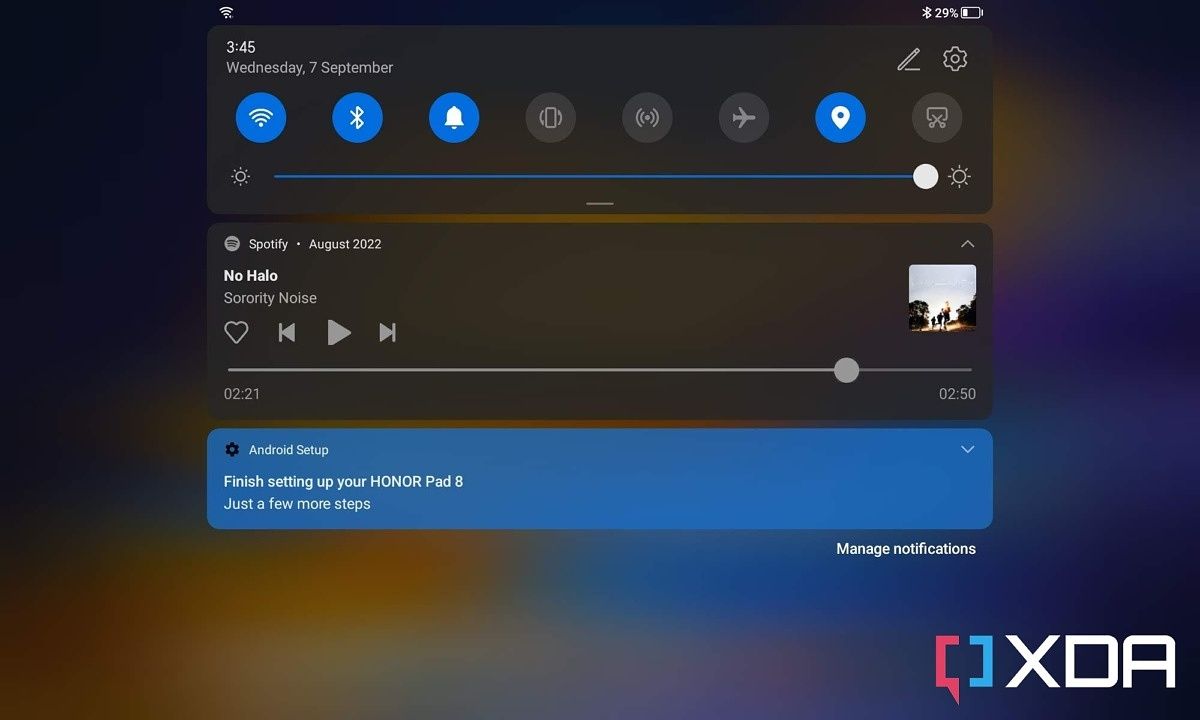
I tested these speakers across a wide range of music and different TV shows and YouTube videos, and I found that they generally didn’t struggle too much. Depending on the songs (the second chorus of No Halo by Sorority Noise being a prime example), it can sound incredibly muddy, but that’s because these are tablet speakers. For the most part, it’ll be fine for music, and for other types of content, these speakers are more than adequate.
Performance, battery life, and software
The performance of the Honor Pad 8 doesn’t really matter all that much, because this is not a productivity machine and isn’t being marketed as such. Nevertheless, it’s important to state that this device has the Qualcomm Snapdragon 680, which is merely a mid-range chipset. It’s fine for pretty basic gaming and the like, but you will notice it struggles with more intensive workloads. When it comes to media decoding, that’s where it’s most apt. I get a score of 3
When it comes to battery life and software, I no longer have the numbers that I had saved from watching YouTube and Netflix on this device, and the reason for that is linked to the software. When I took the tablet out of my bag, I noticed that it wasn’t switched on anymore. Turning it on, I discovered that the device had reset itself and I had lost everything. This included my battery screenshots, benchmarks, and other data that I had collected throughout the course of this review. While I assume that it’s linked to the fact my device was on pre-release firmware previously, I have to report on it because nothing has been communicated to me from Honor to state that officially.
Nevertheless, the battery life was pretty good when using it. I could charge it up with the included 22.5W charger in the box quickly (for a 7250 mAh battery, anyway), and it would last me a whole day pretty easily.
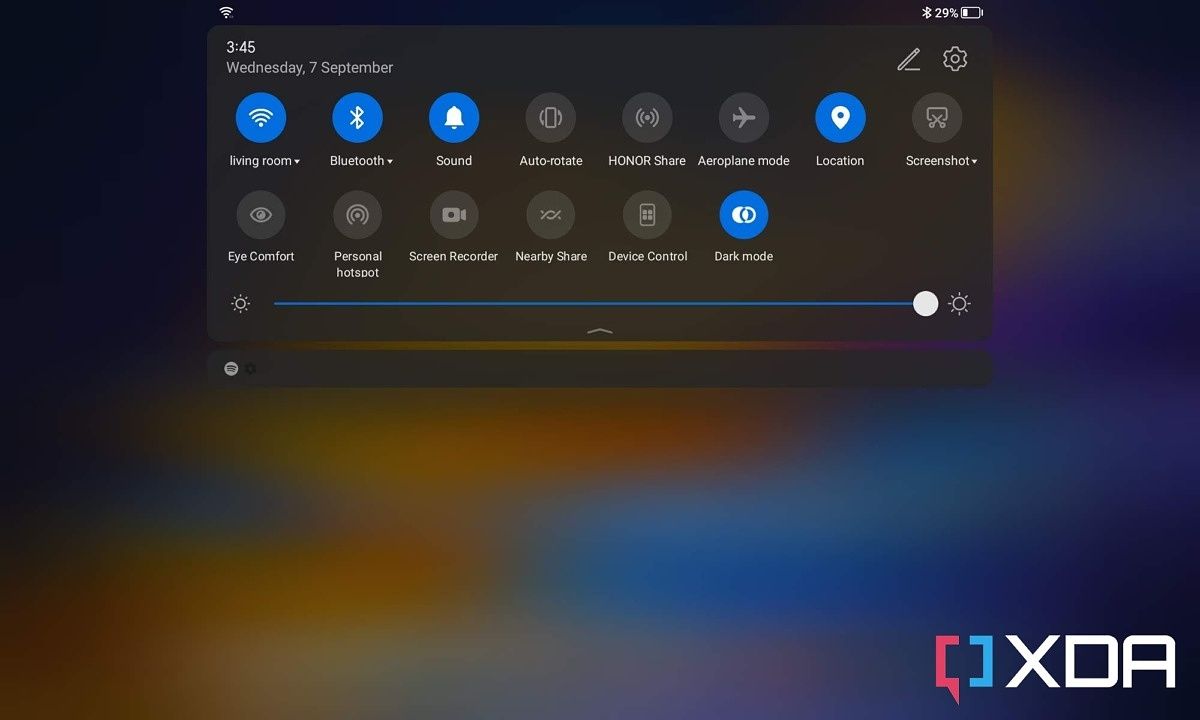
That software, though, is Magic UI 6.0. While it looks like EMUI on Huawei’s phones currently, that’s set to change according to Honor’s EU president. That means what you see here could be drastically different with the next release of Magic UI 7.0. It looks decent and isn’t difficult to use, and the tablet UI makes sense. There’s nothing special here, but there doesn’t have to be.
Should you buy the Honor Pad 8?
This is a pretty good price all things considered as while it has subpar specifications in other departments, it packs upper mid-range specifications for what it’s made for — media consumption. It’s hard to really fault the Honor Pad 8 in any particular way because of its lower price tag, and it’s a lot more budget-friendly than the Honor 70 that launched alongside it. I thought that the Honor 70 was too highly-priced, but I think that the Honor Pad 8 is nearly in the flagship-killer territory with how good it is at what it does.
To be clear, not everyone wants a tablet for more than watching movies and TV shows, and you normally have to spend a lot to get a really good screen. That’s because a high-resolution display will normally command higher specifications as well, especially if the user is gaming or doing other intensive tasks. If you want a tablet for working on the go, then skip this device. You won’t really be able to use it for that, and it won’t really get the job done.
If however, you’re like a lot of people who just want to watch something good in the evening on the couch or in bed, then you can’t go wrong with this tablet. It’s cost-effective and looks good, and that’s all it really needs. You could spend a bit more to get an iPad, but why bother? The iPad (2021) for example is the closest, but it still costs €70 more with a smaller screen and a more outdated design. The bigger screen really matters here. This is honestly one of the best budget tablets that I’ve used in a long time.
The Honor Pad 8 is a media-focused tablet that does a great job on a budget. Want to watch TV shows, movies, or YouTube on an Android tablet? Get this.
The Nothing Phone 1 is the first smartphone from Carl Pei’s new venture. It was hyped to the moon and back leading up to its actual launch. But now that the dust has settled, it’s time to compare it against some of the more established mid-range phones. Featuring a unique see-through design and attention-grabbing LED light strips, the Nothing Phone 1 is a breath of fresh air in the world of boring slab phones. But how does it fare against one of the best mid-range smartphones: Galaxy A53 5G?
Nothing Phone 1 vs Samsung Galaxy A53: Specifications
The Nothing Phone 1’s biggest selling point is its unique design. Even if you don’t care too much about the transparent back and light strips, you have to admit that the company has put a lot of effort into pulling this design off. The general shape and in-hand feel of the Nothing Phone 1 is a lot like the Apple iPhone 12/13. The device has flat aluminum sides and rounded corners. It’s not the most comfortable phone to hold due to the flat edges but feels solid and premium in hand. On the front, there’s a hole-punch display surrounded by symmetrical bezels on all four sides. The fun part is on the back. The semi-transparent back panel offers a look into some of the internals of the phone, including the wireless charging coil and screws. The back also houses four light strips — two surrounding the camera module and two around the charging coil. These lights are used for the Glyph interface, which lets you set up specific light patterns for calls, notifications, and more. You can adjust the light brightness and also use it as a flash when taking photos in low light conditions. If you’re looking for a phone with a cool design but don’t want to spend $999 on the Galaxy Z Flip 4, the Nothing Phone 1 is your best bet.
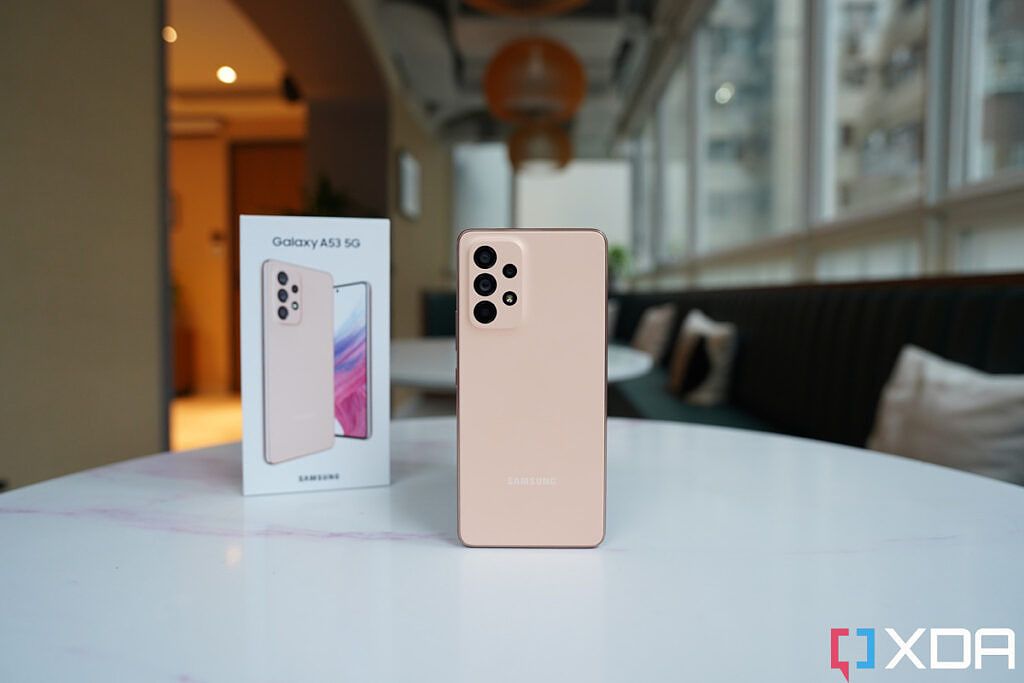
The Galaxy A53 isn’t as interesting as the Nothing Phone 1 in the looks department. It shares the same design as its predecessor, featuring a plastic back with a soft-touch coating and flat sides. The phone features a centered hole-punch display and a rectangular camera module on the back and ditches the curvier aesthetics of its predecessor for a boxier and flatter look. But despite the plastic back and flat sides, the Galaxy A53 is comfortable to hold and feels premium in hand.
In terms of durability, the Galaxy A53 is better as it offers an IP68 rating compared to the IP53 rating of the Nothing Phone 1. The Galaxy A53 comes in Black, White, Blue, Peach, and Bora Purple colorways. Meanwhile, the Nothing Phone 1 only comes in White and Black colors.
Both phones are neck-to-neck in the display department, featuring large, vibrant OLED panels. The Galaxy A53 packs a 6.5-inch FHD+ AMOLED display with a 120Hz refresh rate and 800 nits brightness. The Nothing Phone 1 has a 6.55-inch FHD+ OLED panel with a 120Hz refresh rate and 500 nits max brightness.
Cameras
When it comes to cameras, the Nothing Phone 1 takes a “less is more” approach. It has a dual camera system comprising a 50MP Sony IMX766 sensor with OIS and a 50MP Samsung JN1 ultra-wide lens. The Galaxy A53 is the complete opposite, packing a quad camera system that includes a 64MP primary shooter with OIS, a 12MP ultra-wide camera, a 5MP macro lens, and a 5MP depth lens.
The Nothing Phone 1 and Galaxy A53 are prime examples of how far mid-range phones have come in terms of camera performance. Main shooters on both phones produce excellent images with great dynamic range and plenty of details. The low-light performance is also excellent, though understandably not as good as top flagships. A thing to keep in mind is that the Galaxy A53 tends to oversaturate colors a bit for that extra pop, while the Nothing Phone 1 favors more neutral tones.
Nothing Phone 1: Camera samples
Galaxy A53: Camera samples
Both phones can shoot 4K videos at 30fps and offer good stabilization. However, as we observed in our review, the Nothing Phone 1 is prone to exhibit inaccurate colors, such as extremely warm skin tones.
Performance
The Nothing Phone 1 is powered by Qualcomm’s Snapdragon 778G Plus chipset, which features one Cortex-A78 core clocked at 2.5GHz, three Cortex-A78 cores running at 2.4GHz, and four efficiency Cortex-A55 cores at 1.9GHz. Meanwhile, the Galaxy A53 uses the in-house Exynos 1280 chipset, with two Cortex-A78 cores clocked at 2.4GHz and six Cortex-A53 cores at 2.0GHz.
Not only does the Nothing Phone 1 pack have more power, but it also performs better than the Galaxy A53 in the real world. Nothing OS’ fluid system animations coupled with a smooth 120Hz display and powerful processor ensure the phone performs admirably in everyday tasks. The Nothing Phone 1 also uses UFS 3.1 storage chip, which is significantly faster than the UFS 2.2 storage in the Galaxy A53. Faster storage speeds directly translate to shorter loading times for apps and games, faster data transfer, and more snappy performance.
As for configurations, the Galaxy A53 comes with 4GB/6GB/8GB RAM and 128GB/256GB internal storage and supports microSD card expansion. The Nothing Phone 1, on the other hand, can be configured with 8GB/12GB RAM and 128GB/256GB storage.
Battery life, charging speed, and software
The Galaxy A53 has the Nothing Phone 1 in the battery department. It packs a larger 5,000mAh battery compared to the 4,500mAh cell on the Nothing Phone 1. The Galaxy A53 is your best bet if you want a phone that can easily last you more than a day. The Nothing Phone 1’s battery life is good but not great. On a typical workday, it will last you a full day, but on days when you are using it heavily, you will find yourself reaching for the charger. However, the Nothing Phone 1 has an edge when it comes to charging speed. It offers 33W fast wired charging speed while the Galaxy A53 tops out at 25W. In addition, the Nothing Phone 1 also offers wireless charging support, while the Galaxy A53 doesn’t.
On the software front, both phones ship with Android 12 out of the box. The Nothing Phone 1 runs Nothing OS, which is a near-stock version of Android with a few extras on top. Meanwhile, the Galaxy A53 runs a highly customized interface called One UI 4. As for software support, both phones have one of the best software policies for Android smartphones. The Galaxy A53 is promised to get four years of OS updates and five years of security updates from Samsung. Nothing isn’t too far behind either. It has vowed to offer three years of OS updates and four years of security updates.
Nothing Phone 1 vs Galaxy A53: Which one should you buy?
Picking a clear winner in the Nothing Phone 1 vs Galaxy A53 battle isn’t easy. The Nothing Phone 1 has better performance, wireless charging support, and a more interesting design, but it loses out to the Galaxy A53 in the battery life and software policy departments. Not to mention, it also costs more than the Galaxy A53 in regions like the UK where both the devices are sold.
The Nothing Phone 1 is hands down the coolest mid-range phone on the market right now, packing a unique semi-transparent design, LED light strips, and a beautiful OLED display. While its eye-catching design may not be to everyone’s taste, it offers a lot of power, capable cameras, and an interesting software experience with long software support. It’s perfect for people who want a phone that attracts eyeballs but can’t afford the Galaxy Z Flip 4.
However, those living in the US can’t get hold of the Nothing Phone 1 as it has not yet been officially launched. So for people in the US market, the answer is quite easy — get the Galaxy A53 5G.
The Galaxy A53 needs no introduction. It’s one of the best mid-range smartphones on the market right now. It was launched at $449 but has come down to just $349, making it even more attractive. It offers a vibrant AMOLED display, a versatile camera system, a highly customized software experience, and a software support policy that’s better than what Google offers for its Pixel lineup.
Samsung launched the Galaxy Buds 2 Pro during its Unpacked event in the summer of 2022. These wireless earbuds come in three different colors to choose from. Though, you could always buy a case for them — if you’re not a fan of the default finishes. Packed with advanced audio technologies, these water-resistant buds are ideal for Galaxy Fold 4 and Galaxy Flip 4 users. That’s because they’re designed to work seamlessly with the company’s devices. Now, you must be curious about Active Noise Cancellation (ANC) support on the Galaxy Buds 2 Pro. Do these earbuds have this feature? Here’s what you need to know about this matter in particular.
Galaxy Buds 2 Pro and ANC
For those unfamiliar with ANC, this technology blocks out external noise when you have your compatible earbuds or headphones on. ANC is ideal for those who work in crowded environments or commute through public transport. You block the world out so you can completely immerse yourself in the audio experience. Whether you’re listening to music or podcasts, or maybe watching a video — ANC helps you focus on the digital content you’re consuming. So do the Galaxy Buds 2 Pro support ANC?
The Samsung Galaxy Buds 2 Pro indeed support the Active Noise Cancellation feature. This means you get to optionally block the noise out when you’re using them. Though, note that ANC can drain earbuds’ batteries faster. That’s because ANC is a simulated digital mechanism that requires a power source. It’s not an analog/physical feature that works if you run out of battery.
Personally, I keep ANC on at all times when I’m jogging. Being able to block out other pedestrians’ conversations and just focus on the upbeat music is merely magical. It truly is a must-have feature in earbuds I plan on purchasing.
The Apple Watch Series 8 is the newest addition to the company’s smartwatch lineup. The new model comes packed with several noteworthy upgrades, including a new chipset, a more durable design, Crash Detection, and a new temperature sensor. But does the new smartwatch support Qi wireless charging?
Although the Apple Watch Series 8 supports wireless charging, it can’t be charged using a Qi-certified charging pad. There’s only one way to charge the smartwatch and it’s using the proprietary magnetic puck that comes with it. Since the release of the first Apple Watch, Apple has continued to use this same proprietary charger even as the company’s other products such as the iPhone and AirPods have embraced Qi wireless charging.
Apple’s refusal to adopt the universal wireless standard is also ironic in the face of its environmental messaging. When Apple announced its move to stop bunding chargers with iPhones and Apple Watches, it said it was doing it to reduce electronics waste and carbon emissions. But by not adopting a universal charging standard and promoting proprietary cables and charging tech, the company is only contributing to more electronic waste.
Hopefully, this is the last generation of the Apple Watch to use a proprietary charging solution, and we pray that future models support the Qi standard. But as it stands right now, the Apple Watch Series 8 can only be charged using the magnetic puck that comes with it or a MagSafe charger.
The Apple Watch Series 8 offers the same battery life and charging speed as its predecessor. It’s rated for 18 hours of endurance on the standard mode and up to 36 hours when used in the new Low Power Mode. The new watch starts at $399 and is now up for grabs from Apple’s official website and other retailers. If you’re thinking of getting one, be sure to check out the best Apple Watch Series 8 deals to save money.