LightBlog

mercredi 20 juillet 2022

Samsung details the future of its foldables ahead of Galaxy Z Fold 4 launch

Samsung was the first major manufacturer to release a foldable smartphone. Despite the launch being less than ideal, the company continued to pursue the technology, making iterative improvements with its yearly releases. This year could be its best yet, as Dr. TM Roh, President & Head of MX Business, has claimed that “the mainstream moment for foldable smartphones is here.”

Last year, Samsung dominated the foldable smartphones category, bringing the technology to the masses with its aggressive pricing, financing plans, and trade-in deals. Roh says that last year, 10 million foldable devices were shipped, which is triple that of the year prior. Within the Galaxy foldable line, 70 percent gravitated to the Galaxy Z Flip 3, while the remaining 30 percent to the Galaxy Z Fold 3. This insight is crucial because it shows consumers buying into foldable phones but choosing a different way to experience them. Despite impressive shipments last year, Roh predicts that in the future, growth will continue, which could be a sign of what’s to come.

While foldable phones were once viewed as a novelty when first introduced, they have quickly garnered mainstream approval and success.  The consumer and its interaction with Samsung foldable devices have pushed the company to bring innovation to the space. It has “made advancements” this year with its foldable product lineup, which should further expand the experience for its users. The company says that some of these things wouldn’t be possible without its partnerships with the likes of Google, Microsoft, and others.

Almost time to unpack

Samsung recently started its marketing campaign for its next foldable smartphones, releasing a cryptic tweet and then revealing that its next line of foldable phones, the Galaxy Z Fold 4 and Galaxy Z Flip 4, would be revealed on August 10. The virtual Galaxy Unpacked event should be interesting, as there have been rumors of slightly tweaked designs and improvements in the screen technology. The main star of the event will be smartphones, but Samsung should also have some accessories to show off.

Currently, Samsung has opened its Galaxy Phone reservation page, and like in prior years; there are plenty of deals to be had and incentives that could total up to $200 in credit. While it’s hard sometimes to get excited about something we haven’t seen yet, it’s a good idea to register, as it is non-commital and only takes a name and email address to claim these early registration promotions. The promotional period closes on August 10.

Source: Samsung

The post Samsung details the future of its foldables ahead of Galaxy Z Fold 4 launch appeared first on XDA.


from XDA https://ift.tt/SHXkfVI
via IFTTT

Google Meet now lets you ask questions and answer polls anonymously

Although Google is currently in the process of merging Duo with Meet, the company hasn’t stopped adding new features to the latter. The latest feature to make its way to the video conferencing app lets users ask questions and answer polls anonymously.

According to a recent post on the Google Workspace blog, the new Google Meet feature will give participants the option to ask questions anonymously. Anonymous questions will be available by default, but meeting hosts and co-hosts will be able to disable it by heading over to Meeting Activities > Allow Questions in Q&A > Allow Anonymous questions. On the other hand, the new anonymous polls option will be disabled by default. Meeting hosts and co-hosts will see an option to turn it on when sharing a poll, as shown in the image attached below. Google notes that these settings will not carry over from meeting to meeting.

Screenshot of new anonymous polls toggle in Google Meet.

If you’re wondering whether meeting hosts and co-hosts will be able to see your name even if you ask questions or respond to polls anonymously, you can rest assured that they won’t. Google clarifies that the feature will keep your details anonymous to “other participants, the meeting hosts, and your Google Workspace Admin.” Google will, however, retain your poll responses and anonymous questions. The company will anonymize the data or delete it at a later stage.

The ability to ask questions and answer polls anonymously has started rolling out to users gradually. It should reach all Google Meet users in the coming weeks. Note that the anonymous questions and polls feature will be limited to Google Workspace Essentials, Business Standard, Business Plus, Enterprise Starter, Enterprise Essentials, Enterprise Standard, Enterprise Plus, Teaching and Learning Upgrade, Education Plus and Nonprofits plans, as well as legacy G Suite Business customers. The features will not be available to Google Workspace Business Starter, Education Fundamentals, Education Standard, Frontline customers, or legacy G Suite Basic customers.


Source: Google Workspace blog

The post Google Meet now lets you ask questions and answer polls anonymously appeared first on XDA.


from XDA https://ift.tt/MfkI1pu
via IFTTT

YouTube Music update brings support for Android 13’s media controls UI

Google has started rolling out an update for the YouTube Music app to some users. The update (v5.16) targets API level 33, i.e., Android 13, and it brings support for the updated media controls that Google introduced with Android 13 DP2 earlier this year. However, the updated media controls UI for YouTube Music comes with a few monitor changes.

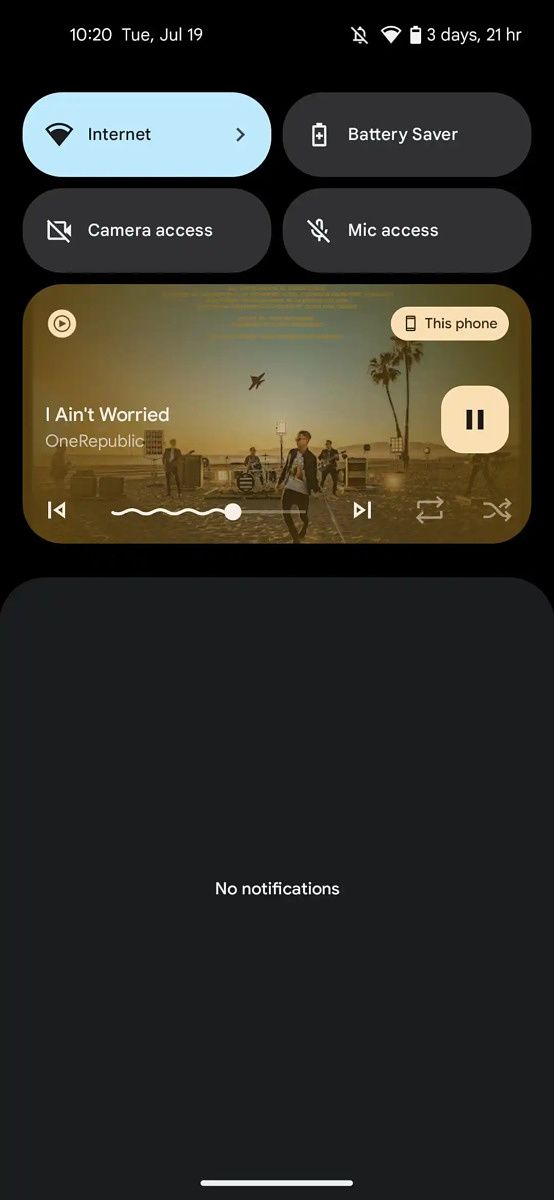
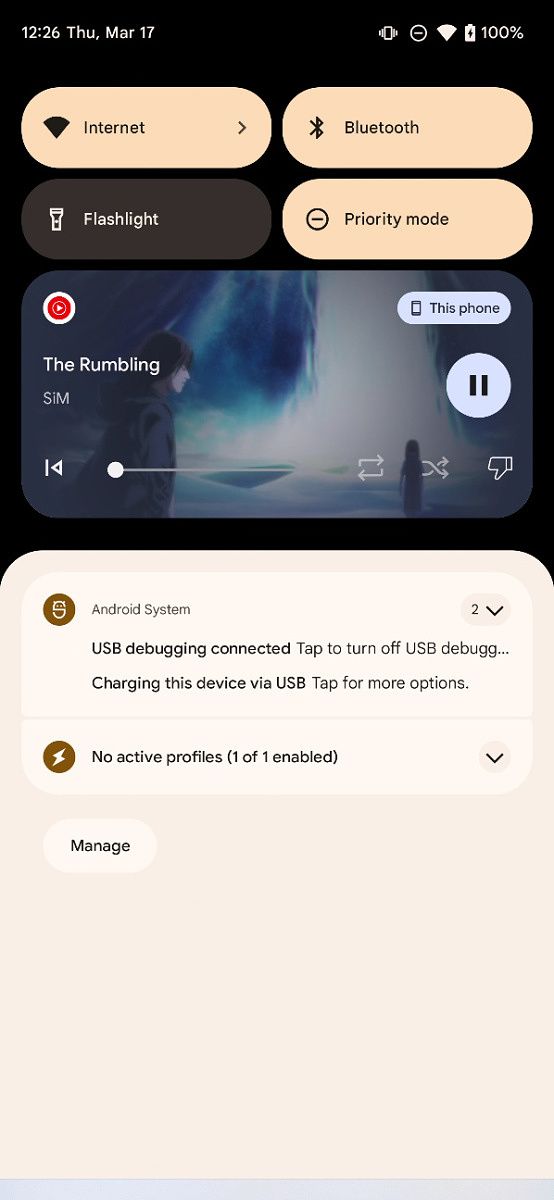
As you can see in the attached screenshots (via 9to5Google), the updated media controls UI for YouTube Music features cover art in the background, along with themed buttons based on colors extracted from the cover art. It includes a YouTube Music icon tucked in the top left corner, with the song’s name and album listed right underneath. In the top left corner, you’ll find the output picker with a large play/pause button right underneath.

YouTube Music Android 13 media controls UI on lockscreen. YouTube Music Android 13 media controls UI in notifications shade.

Source: 9to5Google

The new animated progress bar resides at the bottom, flanked by the forward and back buttons. Lastly, you’ll find the shuffle and repeat buttons in the bottom right corner. Interestingly, the updated UI does not feature a like/dislike button, even though it was available in previous versions. For reference, we’ve attached screenshots of the media controls in Android 12 and Android 13 DP2 below.

Android 12 media controls. Android 13 media player UI from Android 13 DP2

As mentioned earlier, YouTube Music v5.16 is currently only available for a small number of users. It hasn’t rolled out widely through the Play Store, but it should make its way to more users over the coming days.

It shouldn’t be long before Google updates the rest of its apps for the upcoming Android 13 release. The company has already seeded the final beta build for the Pixel lineup, and the first stable build should be right around the corner.

What do you think of the updated YouTube Music media controls UI? Is it an improvement compared to the one found on Android 12 devices? Let us know in the comments section below.


Via: 9to5Google

The post YouTube Music update brings support for Android 13’s media controls UI appeared first on XDA.


from XDA https://ift.tt/NZ1U6RC
via IFTTT

Netflix’s upcoming ad-supported tier won’t give you access to all the content on the platform

Netflix has implemented a two-pronged strategy to boost its revenue in the coming months. The streaming platform is looking to charge users extra for sharing their passwords, and it’s working on a cheaper ad-supported subscription plan to attract new subscribers. While the company has already started testing the former with some users in Latin America, details about its upcoming ad-supported tier have been under the wraps so far. But that changes today.

Netflix’s co-CEO and Chief Content Officer Ted Sarandos has shared some details about the affordable ad-supported plan during a recent earnings call. According to Deadline, Sarandos has revealed that the ad-supported Netflix subscription plan will roll out to users early next year. The streaming giant has partnered with Microsoft for the rollout.

Sarandos has also confirmed that the ad-supported tier will not give users access to all the content available on the platform. While users will get access to all of Netflix’s original programming, some of the licensed content on the platform will not be available on the cheaper tier.

Sarandos said, “Today, the vast majority of what people watch on Netflix, we can include in the ad-supported tier. There’s some things that don’t and we’re in conversations with the studios on, but if we launched the product today, members in the ad-tier would have a great experience. We will clear some additional content but certainly not all of it but don’t think it’s a material holdback for the business.”

In a letter to shareholders, Netflix further added that the ad-supported tier will first debut in a “handful of markets where advertising spend is significant.” At the moment, we have no further details about the upcoming ad-supported Netflix plan. But, based on what we know so far, it doesn’t seem to be a crowd pleaser.

Will you subscribe to Netflix’s upcoming ad-supported plan if you don’t get access to all the content on the platform? Let us know in the comments section below.


Via: Deadline

The post Netflix’s upcoming ad-supported tier won’t give you access to all the content on the platform appeared first on XDA.


from XDA https://ift.tt/lCfzws3
via IFTTT

Redmi K50i Unboxing: What’s inside the box?

The Redmi K50i has finally arrived in India and it’s the first Redmi K-series phone from the brand in three years. This particular phone is powered by MediaTek’s Dimensity 8100 chip, and is touted to be one of the fastest phones in its segment. If you’re interested in buying this phone and are wondering what you get inside the box, then we’ve got you covered. Here’s everything you get inside the Redmi K50i’s retail box in India:

What’s inside the Redmi K50i (India) retail box?

Redmi K50i smartphone on a yellow-color background next to its box contents

The box of the Redmi K50i comes with the following content:

  • Redmi K50i (in the color you’ve chosen)
  • 67W fast-charger
  • USB-A to USB-C cable
  • SIM ejection tool
  • Region-specific documentation, including Quick Start Guide
  • Basic TPU/silicon case
  • Basic Screen Protector (pre-applied)

The Redmi K50i comes with pretty much everything you’d expect to see with a smartphone inside the retail packaging. Unlike a lot of other OEMs, Redmi is including a charger in the box along with its new Redmi K50i. You get a 67W charger which should be able to top up the device fairly quickly. The device, as you can see, also comes with a transparent TPU case and a screen protector (pre-applied on the phone) for some basic protection out of the box. This ensures you don’t have to spend any additional money on a case or a screen protector for the phone, at least not immediately.

The Redmi K50i starts at ₹25,999 for the 6GB+128GB variant and it comes in three colors — Quick Silver, Stealth Black, and Phantom Blue. We have the Quick Silver variant of the phone with us and it looks very clean with just the camera island and the Redmi branding at the back. You can visit the link mentioned above to find the best price for it online. If the device appears familiar to you, it’s because the same phone is sold as the Redmi Note 11T Pro in China and as the Poco X4 GT in global markets.

So which Redmi K50i color variant are you planning to buy? Let us know by dropping a line in the comments below.

The post Redmi K50i Unboxing: What’s inside the box? appeared first on XDA.


from XDA https://ift.tt/NpT8q5a
via IFTTT

The Redmi Note 11T Pro makes its way to the Indian market as the Redmi K50i

Xiaomi launched the Redmi Note 11T Pro and Redmi Note 11T Pro Plus in China this May. The devices offered 144Hz high refresh rate LCD panels and MediaTek’s Dimensity 8100 chipset at an affordable price, making them great picks for budget-conscious mobile gamers. Xiaomi has now brought one of these devices to the Indian market but with a different marketing name — the Redmi K50i.

The new Redmi K50i is a rebranded Redmi Note 11T Pro, featuring the same hardware. It’s indistinguishable from the Chinese model in almost all aspects since Xiaomi hasn’t made any changes to its design either. So, if you’re already familiar with the Chinese Redmi Note 11T Pro, you probably know what to expect from the new Redmi K50i. If not, here’s a quick overview.

Xiaomi Redmi K50i: Specifications

Specification Xiaomi Redmi K50i
Dimensions & Weight
  • 163.64 x 74.29 x 8.87mm
  • 200g
Display
  • 6.6-inch LCD
  • 2460 x 1080p resolution, 440PPI
  • 144Hz refresh rate
  • 7-stage AdaptiveSync (30Hz, 48Hz, 50Hz, 60Hz, 90Hz, 120Hz, 144Hz)
  • 100% DCI-P3 coverage
  • DC dimming
  • Dolby Vision support
SoC
  • MediaTek Dimensity 8100
  • Arm Mali-G610 MC6 GPU
RAM & Storage
  • 6GB/8GB LPDDR5 RAM
  • 128GB/256GB UFS 3.1 storage
Battery & Charging
  • 5,080mAh
  • 67W wired fast charging support (charger included)
  • PD support up to 27W
Security Side-mounted fingerprint scanner
Rear Camera(s)
  • Primary: 64MP Samsung ISOCELL GW1
  • Ultra-wide: 8MP, 120-degree FoV
  • Macro: 2MP
Front Camera(s) 16MP
Port(s)
  • USB Type-C
  • 3.5mm headphone jack
Audio Dual stereo speakers
Connectivity
  • 5G dual SIM
    • Supported bands: n1/n3/n5/n7/n8/n20/n28A/n38/n40/n41/n77/n78
  • 4G LTE
  • Wi-Fi 6
  • Bluetooth 5.3
Software MIUI 13 based on Android 12
Other Features
  • VC liquid cooling
  • IR blaster
  • X-axis linear vibration motor
  • IP53 certification

The Redmi K50i is a premium mid-ranger featuring MediaTek’s Dimensity 8100 chipset. The SoC is paired with 8GB of LPDDR5 RAM and 256GB of fast UFS 3.1 storage, a 6.6-inch FHD+ LCD panel that refreshes at 144Hz, and a 5,080mAh battery with 67W fast charging support. This spec combo makes it a great pick for mobile gamers on a budget, but you should wait for our full review before taking the leap and ordering one for yourself.

Stealth Black Redmi K50i poster.

In terms of cameras, the Redmi K50i features a 64MP Samsung ISOCELL GW1 primary sensor, an 8MP ultra-wide camera, and a 2MP macro camera on the back, along with a 16MP selfie shooter up front. Other noteworthy features include a side-mounted fingerprint scanner, dual stereo speakers, an IR blaster, a 3.5mm headphone jack, and IP53 certification for dust and water resistance.

Quick Silver Redmi K50i poster.

Being a MediaTek Dimensity-powered device, the Redmi K50i also offers 5G capabilities with support for twelve 5G bands. In addition, it includes 4G LTE support, Wi-Fi 6, and Bluetooth 5.3. Unlike its Chinese counterpart, however, the device does not offer NFC support.

Phantom Blue Redmi K50i poster.


On the software front, the Redmi K50i runs MIUI 13 based on Android 12 out of the box. Xiaomi has promised that it will deliver two years of Android upgrades and three years of security updates for the device. This means that Xiaomi will update the device to Android 13 sometime later this year or early next year and Android 14 after Google rolls it out for its Pixel devices next year. The company will also deliver regular security updates to the device until 2025.

Pricing & Availability

The Redmi K50i will go on sale in India starting July 23. It will be available in 3 colors, Stealth Black, Quick Silver, and Phantom Blue, at the following prices:

  • 6GB + 128GB: ₹25,999 (~$325)
  • 8GB + 256GB: ₹28,999 (~$362)

Xiaomi has partnered with ICICI Bank to offer up to ₹3,000 instant discounts on purchases made with ICICI Bank cards. Along with the Redmi K50i, Xiaomi has also launched the Redmi Buds 3 Lite TWS earbuds in the Indian market. The affordable TWS earbuds will go on sale starting July 31 at a price of ₹1,999 (~$25). It will be available at an early bird price of ₹1,499 for the first 48 hours.

What do you think of the new Redmi K50i? Will it be your next smartphone, or are you going to pick another device in the same price range? Let us know in the comments section below.

The post The Redmi Note 11T Pro makes its way to the Indian market as the Redmi K50i appeared first on XDA.


from XDA https://ift.tt/NRqw3DZ
via IFTTT

mardi 19 juillet 2022

Best docks for the Samsung Galaxy Book 2 Pro series

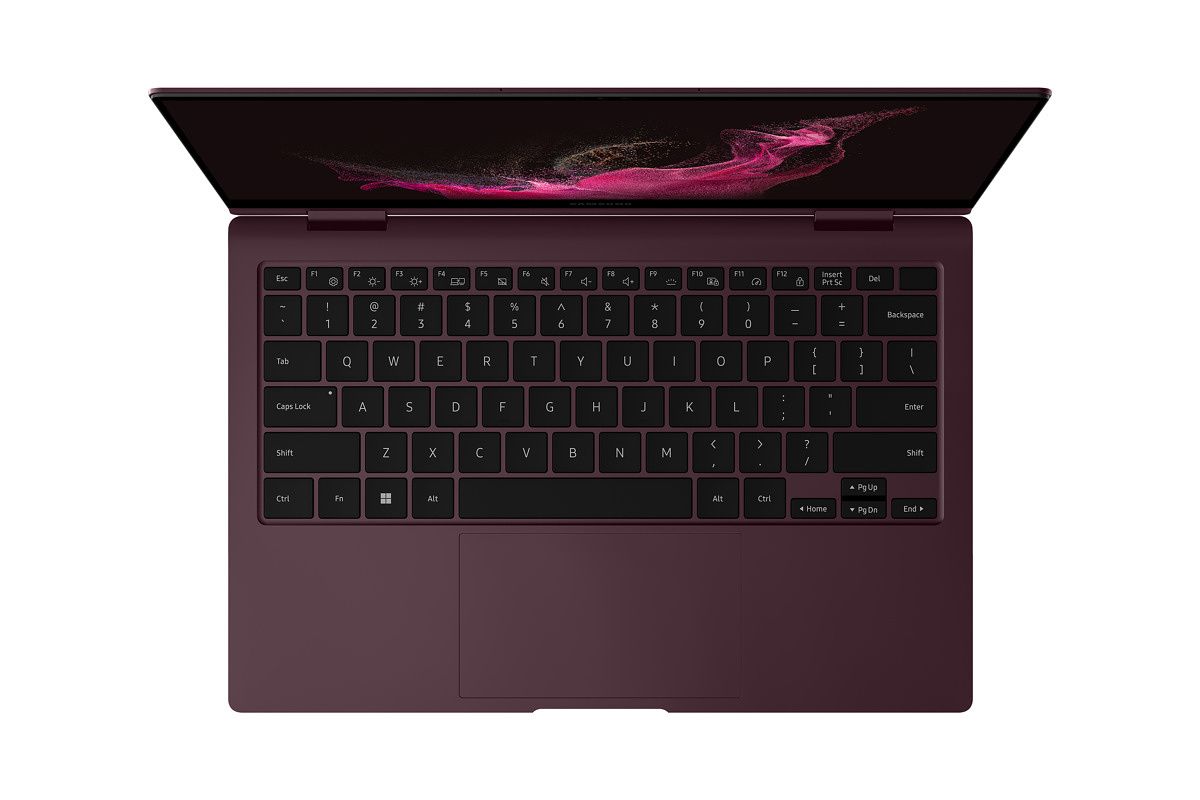
Samsung recently introduced the Galaxy Book 2 Pro 360 series of laptops, and it’s looking pretty good. The original series already had some of the best lightweight laptops on the market, but Samsung has kicked things up a notch for the successors. They now have more powerful processors and better webcams. One thing that hasn’t changed, though, is the selection of ports. These are lightweight laptops, and ports aren’t abundant. But you do get Thunderbolt 4 support, and there are plenty of docks you can use to expand the connectivity on your Samsung Galaxy Book 2 Pro.

We’re here to help with that, and we’ve rounded up some of the best docks you can buy for the Samsung Galaxy Book 2 Pro series of laptops. In fact, these will also work for the standard Galaxy Book 2 360 and the previous Galaxy Book Pro generation, since they all support Thunderbolt. We didn’t just stick to Thunderbolt docks though, there are also some cheaper USB-C docks if you don’t need all that bandwidth.

    Belkin Connect Pro THunderbolt 4 Dock

    Premium versatile dock

    The Belkin Connect Pro is a capable Thunderbolt 4 dock that comes with multiple USB ports, two HDMI outputs, Gigabit Ethernet, Thunderbolt daisy-chaining, and more, including 90W charging. It's pricy, but very capable.
    Kensington SD5560T

    DisplayPort and much more

    The Kensington SD5500T Thunderbolt 3 dock supports the full bandwidth of Thunderbolt 4, and it has plenty of ports, including multiple USB Type-A ports, HDMI, Ethernet, and Thunderbolt daisy-chaining. Plus, it's a unique design compared to most other docks.
    Razer Thunderbolt 4 Dock

    Sleek and clean

    If you want one of the cleanest docks around, the Razer Thunderbolt 4 Dock delivers, and it still gives you plenty of ports, including three Thunderbolt downstream ports, fast Ethernet, and multiple USB Type-A ports. There's also a version with RGB lighting.
    Amazon Basics Thunderbolt 3 Docking Station

    Affordable Thunderbolt

    This Thunderbolt 3 dock from Amazon Basics includes most of what you'd expect: USB Type-A ports, Ethernet, an SD card reader, and headphone jack. It even supports Thunderbolt daisy-chaining. It only supports 60W charging, but it's relatively cheap.
    Plugable 14-in-1 Thunderbolt 3 Dock

    Tons of ports

    If you w-ant to add a lot of ports to your Samsung Galaxy Book 2 Pro, this is one of the best docks out there. It has lots of USB ports, HDMI, DisplayPort, Gigabit Ethernet, SD card readers, and a headphone jack. It even supports 96W charging.
    Anker PowoerExpand 5-in-1 Thunderbolt 4 Mini Dock

    All Thunderbolt

    If you want a dock focused on daisy-chaining, this Anker PowerExpand model is for you. It includes three Thunderbolt 4 downstream ports plus a USB Type-A port for quickly plugging in peripherals. It can deliver 85W of power to your laptop, too.
    Plugable USB Universal Docking Station

    More ports at a reasonable price

    Thunderbolt docks can be expensive, so this alternative from Plugable might help. It uses a standard USB Type-A or Type-C port, but it still has a lot of ports, HDMI, Ethernet, and a headphone jack. It can't charge your laptop, though.
    Anker PowerExpand 11-in-1 Adapter

    Portable ports

    This Anker USB-C hub gives you a hanful of ports in a compact package so you can take it anywhere easily. It has HDMI, DisplayPort, multiple USB ports, Ethermet, and more. It even supports 85W of power delivery to your laptop.
    Satechi Aluminum Multi-port Adapter V2

    Cheaper expansion

    This Satechi USB-C hub is even more portable and affordable, but it still has some ports. You get USB ports, Ethernet, HDMI, and SD card readers in a compact package and an aluminum chassis that helps it feel more premium.

And those are some of the best docks you can get for the Samsung Galaxy Book 2 Pro series. These can be useful for an of the models, but the Galaxy Book 2 Pro 360 may need it the most. It relies mostly on USB Type-C ports, so these adapters will allow you to connect all kinds of peripherals you couldn’t connect otherwise. If I were choosing for myself, the Plugable 14-in-1 Thunderbolt dock makes the most sense to me, since it adds so many ports and it’s not super expensive. However, it depends on what you need from the dock.

If you haven’t yet, you can buy the Samsung Galaxy Book 2 Pro series below. Otherwise, you can check out the best Samsung laptops to see if there’s another option that interests you. Otherwise, you can also stop by our list of the best laptops overall to see what other brands are putting out.

    Samsung Galaxy Book 2 Pro
    The Samsung Galaxy Book 2 Pro is an extremely thin and light laptop, but it still comes with 12th-gen Intel processors.
    Samsung Galaxy Book 2 Pro 360
    The Samsung Galaxy Book 2 Pro series is focused on thin and lightweight laptops. Because of their thin design, a Thunderbolt dock can help if you need more ports.

The post Best docks for the Samsung Galaxy Book 2 Pro series appeared first on XDA.


from XDA https://ift.tt/rZCxKqO
via IFTTT