One UI 3.0 is Samsung’s latest customized build of Android based on Android 11. A public beta build of One UI 3.0 had previously been available for the Samsung Galaxy S20, Galaxy S20+, and the Galaxy S20 Ultra in the United States and South Korea, but the OEM is gradually expanding the beta initiative in more regions across the globe. The Exynos powered international variant of the Galaxy S20 has now received its first One UI 3.0 beta update in Europe.
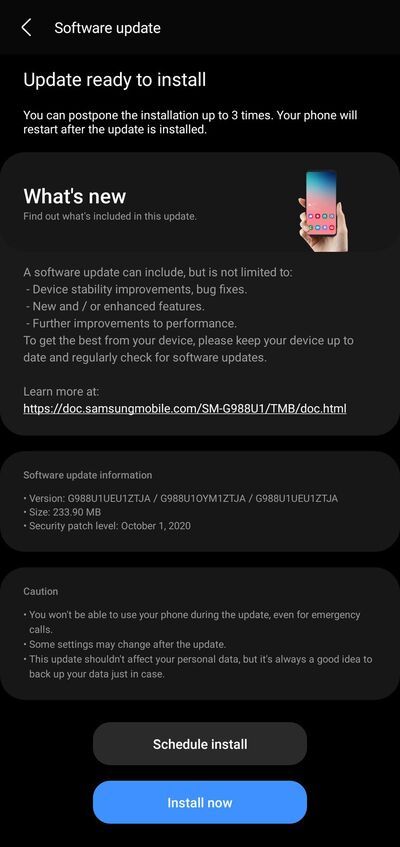
This update is currently rolling out to users in Germany, i.e. for the Exynos 990 laden carrier unlocked Galaxy S20 lineup. The initial beta build with version G98xxXXU5ZTJA comes in at about 1.8GB in size. The update brings in all of the new features included in the stable Android 11 codebase to these phones, along with several improvements to Samsung’s own One UI skin. Additionally, the U.S. Snapdragon model of the Galaxy S20 has received a similar build with version number G98xU1UEU1ZTJA as its second One UI 3.0 public beta firmware. In both cases, Samsung bumps up the Android security patch level of the device to October 2020.
For those of you who want to take this software release for a spin, you can download the appropriate OTA package for your model from this index and sideload it using the stock recovery environment. While you do get the opportunity to try out the latest firmware release from Samsung, with its revamped UI and host of new features, before it is rolled out to the public, keep in mind that this comes with the risk of system instability and broken features. Fortunately, Samsung has yet to increment the bootloader version in these beta builds, which means you can still revert back to stable Android 10/One UI 2.5 firmware by performing a manual flash.
One of the things that have always impressed me about iPhones is the degree to which they are part of the mainstream cultural discourse. When Apple introduces a new iPhone, the news is covered not just by tech media, but even lifestyle or general news outlets. It’s a level of relevance that most other phone brands often fail to garner – although Samsung is often heavily covered, it seems like everyone has something to say when Apple makes an announcement.
And so, by the time you’re reading this, you will have heard that Apple has announced four models in the new iPhone 12 family, and one of their major new features is that they all support 5G.
Apple’s big claim was that 5G just got real with the launch of the iPhone 12. This alone shows how important 5G is to the iPhone story this year, so much so that they reportedly forewent the option of a 120Hz display in favor of 5G.
This is great news for everyone in the mobile industry, from carriers to Qualcomm and even rivals like Samsung, because they’ve all been driving the 5G hype train — even if 5G isn’t quite ready for prime time. But now that Apple is doing it, 5G is going to get that much-needed boost.
5G is here! Well, kind of…
Technically speaking, 5G has been available in the US for over a year, but it’s partially here practically and realistically speaking. Speeds for sub-6 5G (used by T-Mobile and AT&T) are, for the most part, just a bit faster than 4G, and in some cases, slower. Then there’s the mmWave 5G that Verizon has deployed, and while it’s actually noticeably fast – we’ve received upwards of 2Gbps connected to Verizon’s fastest network – reception areas are extremely limited.
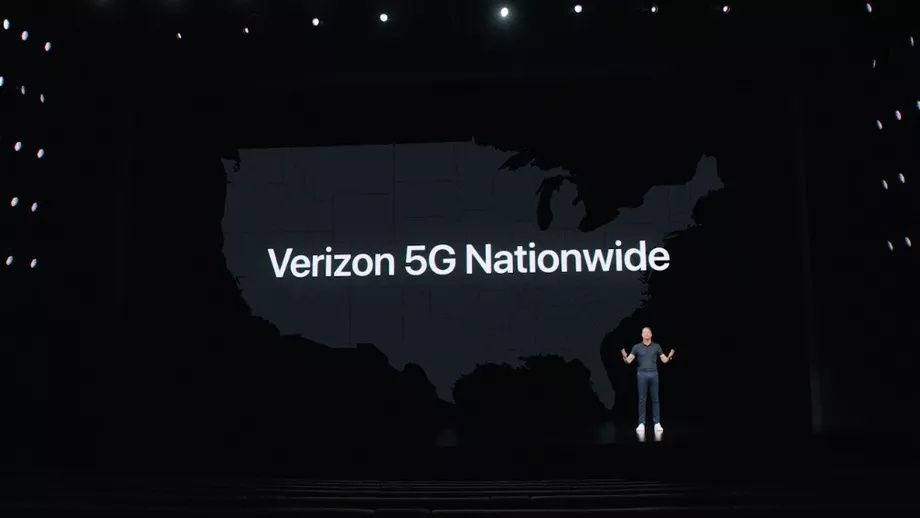
In fact, Verizon used the iPhone 12 launch show as a platform to announce it, too, is launching a sub-6 network, one that’s slower but will at least cover “nationwide.” It’s unlikely Verizon has magically been able to work out the kinks slowing down AT&T and T-Mobile’s sub-6 5G, so chances are, in the immediate future, the state of 5G remains mostly unchanged.
Normally, if something has been hyped this much and fails to deliver at even the most basic level, consumers would revolt. Imagine how mad you’d be if you purchased a Tesla that still needs gas or a Galaxy Fold that couldn’t fold. You’d flip out.
The fact that there hasn’t been much pushback against the sad state of 5G in the US shows that, for the most part, the average person doesn’t know much, nor do they careabout 5G. Samsung, LG, and Motorola may have been releasing 5G phones stateside for well over a year, and every carrier and phone store in the US are plastered with banners advertising 5G. Still, for the most part, people don’t care yet — until the iPhone 12.
Verizon highlighted the benefits of 5G UWB in Stadiums, Venues, and Airports.
When Apple does something, the mobile industry follows
A couple of years ago, I interviewed the CEO of Anker, Steven Yang, and he told me he wishes Apple would make the switch to USB-C because, in his words, “once Apple does it, the entire industry follows and USB-C instantly becomes the norm.”
It's not mainstream until Apple does it, and when they do, the entire industry usually jumps onboard
Android fans reading this may be rolling their eyes, but it’s true. Think about FaceTime. Video calling had existed in various apps long before Apple introduced their take, but it wasn’t until Apple did it that video calling took off, at least in North America. The same can be said for true wireless earbuds. Almost a year before the AirPods made their debut, German brand Bragi and Chinese start-ups had already released wireless earbuds. But the market did not take off until after the AirPods.
Today, AirPods are synonymous with wireless earbuds and ubiquitous around the world. And since we’re on the topic of the AirPods, remember when the headphone jack was a no-brainer, must-include port in all electronic devices? Apple killed it; people, including media and fans, complained loudly; but ultimately, Apple won anyway — the headphone jack is dead in smartphones.
Now that the latest iPhones not only support 5G, but Apple is actively hyping it? It’s going to be a game-changer for the industry. The average person will want to know what 5G is now and perhaps start asking questions when their iPhone 12s are connected to 5G networks that don’t bring the noticeable improvements in data speeds that every carrier tries to extol as the benefits of 5G.
Apple and Verizon are going to heavily promote 5G UWB, which isn’t available in many places.
How will the iPhone 12 5G spur carriers into action?
Consider other features like visual voicemail, iMessage, and eSIMs. Each of these was a feature that Apple developed and received widespread support from carriers for almost immediately. Considering the sheer number of iPhones sold every year, the iPhone is the number one smartphone that can spur carriers into action.
People don't know what they want until you show it to them, and Apple will make people want 5G
eSIMs is a great example – they’ve existed in some form on certain Android phones for a while, but carrier support was incredibly sketchy. The introduction of the eSIM to the iPhone and the iPad resulted in a lot more carriers supporting the eSIM. Still, even then, issues remain that can only be resolved as the technology matures.
The same will ultimately apply to 5G and the iPhone 12. The technology isn’t fleshed out, but until now, most people didn’t care about 5G. It’s a well-known industry secret that iPhone customers offer significantly higher Average Revenue Per User – one of the key metrics that partners and carriers look at – meaning Apple users spend more than Android users. This also means that Apple can exert a certain amount of influence over carriers – we’ve seen that with Apple’s tight control of pricing ever since the first iPhone. Now, they need to figure out how they can make meaningful improvements to 5G in a short space of time.
How can they do it? An AT&T spokesperson told the Washington Post it could aggregate more 4G spectrum for 5G to boost speeds (Sub-6 5G essentially share the same spectrum as 4G LTE right now). “Densification” of 5G signals – increasing the volume of signals in a given space – is another method that’s been proposed and is how Verizon has approached the ultra-wideband part of its network.
Whatever they end up doing, the pressure is now on for carriers to deliver data speeds that are actually, you know, fifth-generation. As the iPhone now supports it, Apple’s marketing arm will make the mainstream general public want it. As Steve Jobs once said, people don’t know what they want until you show it to them, and we can trust that Apple will make people want 5G.
Following the recent announcement of the new LG K42, LG K52, and LG K62, the South Korean OEM is gearing up to launch another smartphone as part of its K Series. The upcoming device was recently spotted in Google Play Console’s listing of certified devices, revealing some of its key specifications. The Google Play Console listing suggests that the upcoming device will be called the LG K92 5G, and it will go by the model name LM-K920 and code-name acexlm. The listing further reveals that the device will run on the sm6350 platform, which is the part number for the new Qualcomm Snapdragon 690 5G chipset.
As you can see in the attached image, the LG K92 will feature 6GB of RAM, an FHD+ display, and it’ll run Android 10 out of the box. Further, the listing reveals that the device will include an Adreno 619 GPU. While the image in the listing doesn’t give us a clear look at the device, renowned leaker Evan Blass has shared a high-resolution render that reveals a bit more about the device.
Unlike the other three devices in the LG K Series mentioned above, the upcoming LG K92 won’t include a rectangular camera module on the back. Instead, the device will offer a Pixel 3-like two-tone finish with three of the four cameras embedded within the top class. The fourth, likely primary 64MP, sensor will protrude slightly. Right next to the camera module, the device will have a large quad-flash array, with camera branding underneath.
The render further reveals that the LG K92 will have a centered hole-punch cutout for the selfie camera, a side-mounted fingerprint scanner integrated into the power button, the volume rocker on the left edge, and an extra button underneath the volume rocker. The device also looks to have a 3.5mm headphone jack, but we can’t be sure of that at the moment. Additionally, the render reveals that the device will be released on AT&T’s sister-brand Cricket Wireless in the US, and it will feature prominent Cricket branding on the back panel.
YouTube Music is going to replace Google Play Music, but there are plenty of reasons why people have been holding onto Play Music. Namely, the fact that Play Music has a bunch of features that YouTube Music either implements pretty badly or straight up doesn’t have. But as the window for escaping the Google Play Music boat before it sinks is approaching, YouTube Music has been adding features constantly to bring it to feature parity with its predecessor. Recently, it got support for uploading your own music, but the implementation wasn’t quite the same as uploads in Google Play Music. Now, though, you can download uploaded songs contained in playlists if you’re a free user.
This change was first spotted by a Reddit user. So basically, how this works is that if you’re a free user and you have a playlist with uploaded songs on it, you’ll now be able to download the uploaded songs along with the whole playlist and play them offline, instead of being forced to individually download them. If you’re not a YouTube Music user you might think that this should be pretty basic functionality. And… well, it is. But as mentioned before, YouTube Music is working overtime to catch up to the functionality that Google Play Music had before they finally pull the plug on it.
In all seriousness, though, it is good to see new functionality as essential as this being added to the app, and as Google keeps refining the service, this will be just one change of many more to come. If you’ve been on the fence on whether to stay on Google Play Music or finally migrate to YouTube Music, now it’s as good of a time as ever, especially with the fact that the former is expected to be sunset by the end of the year.
The newly released Google Pixel 4a 5G and Pixel 5 come with a revamped version of the Recorder app, an immensely useful voice recording app that Google debuted last year on the Pixel 4. The new Google Recorder 2.0 brings several exciting features, including a Smart Scrolling feature that highlights important keywords in a transcript next to the scrollbar, an Audio Editing feature that lets you edit your voice recording by editing the transcript, and Video Clips that allows you to generate a video clip using your audio recording.
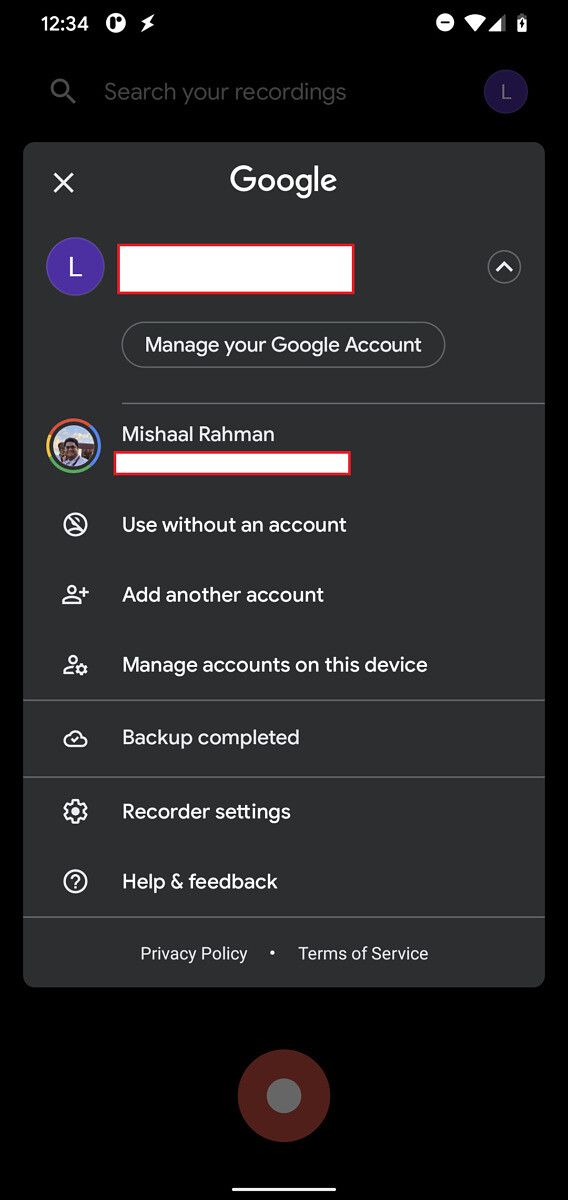
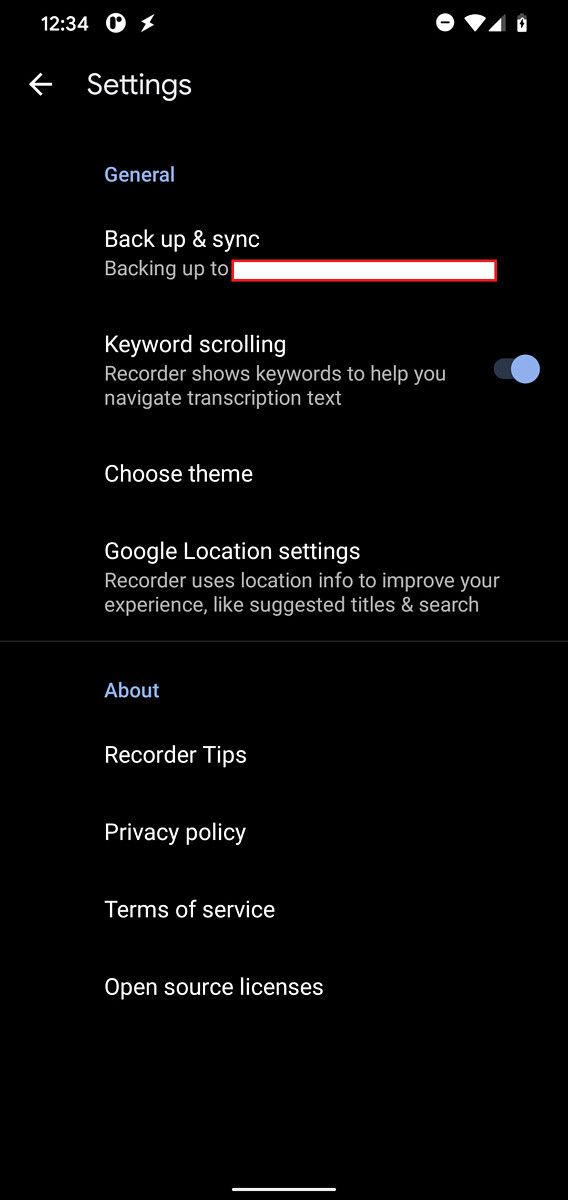
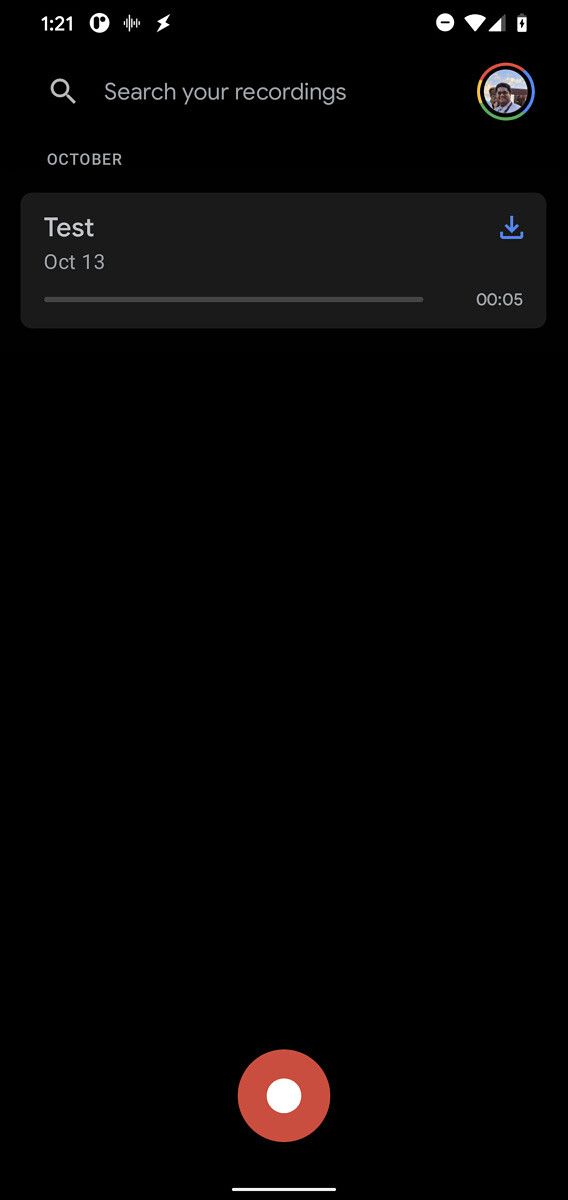
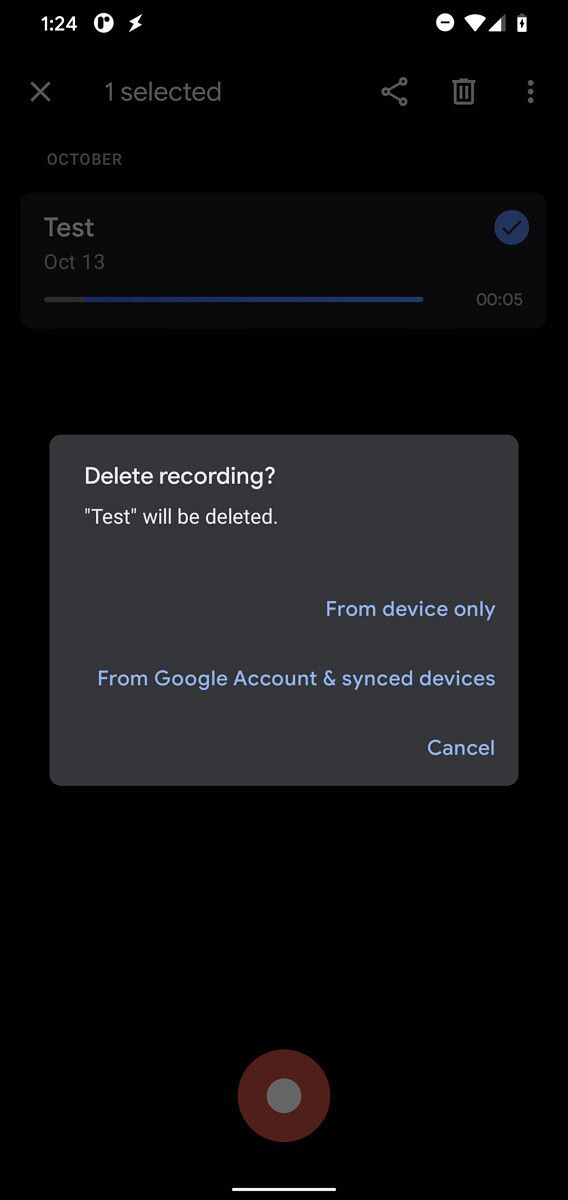
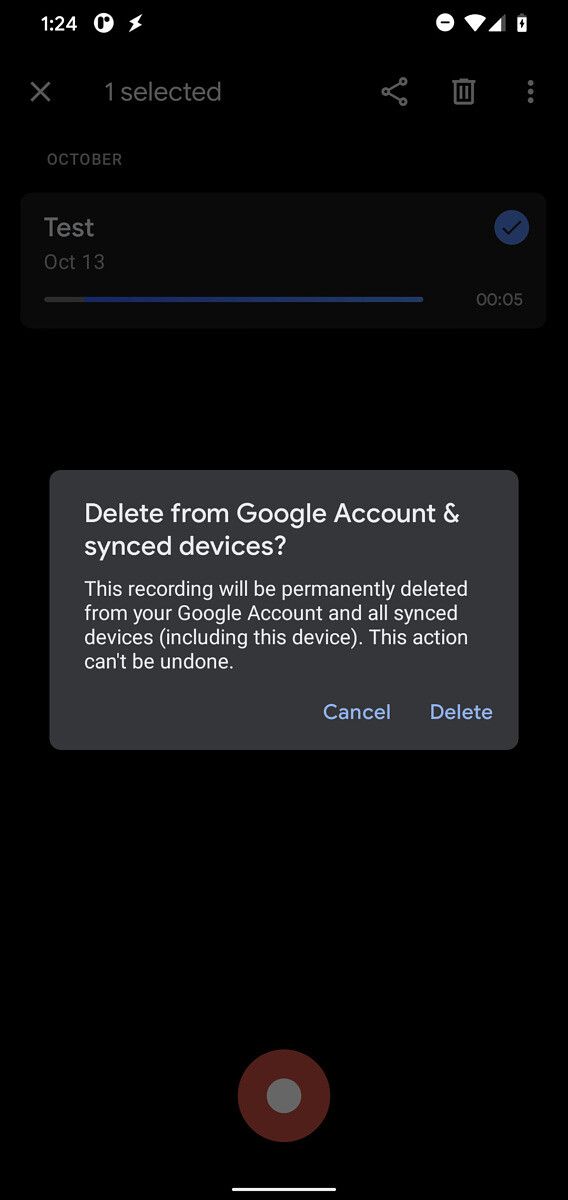
Now, the app is preparing to add Google Account integration that will enable users to back up their recordings to Google Drive automatically. Currently, if you want to backup your audio or transcript files, you have to either locally export these files or upload them manually to Google Drive. Once Google Account integration goes live, Google Recorder will automatically backup and restore your recordings for you. The recordings will be backed up on your Google Drive and count against your storage.
Our Editor-in-Chief, Mishaal Rahman, managed to activate this new feature in Google Recorder 2.0 extracted from Pixel 5, and you can see it in action in the screenshots attached below.
Similar to Google Photos, you’ll also have the option to back up recordings only when you’re connected to a Wi-Fi network. Moreover, if you end up losing the on-device recordings, you’ll be able to redownload them from your Google Drive backup. Previously, if you uninstalled or cleared data for the Recorder app, there was no way to restore recordings in the app – you would have to rely on whatever files you manually externally backed up, with no way to reimport them into Google Recorder.
We don’t know when Google plans to roll out this feature to the masses, but we’ll be sure to let you know when that happens. Meanwhile, if you’re interested, you can try out the new Recorder app on your Android phone running Android 10 and above.
GitHub released its mobile app for iOS and Android earlier this year in March. Since its initial release, the app has been updated a couple of times with new features to help developers get their work done on the go. The previous update, which rolled out in June, brought the ability to render Markdown, image, and PDF files on request, a fix for the emoji rendering issue, and more. Now, the team is rolling out version 1.3 of the app with more new features.
GitHub v1.3 has started rolling out to users via the Google Play Store, and it brings an overhaul for the code review experience. The update includes a new toggle to turn off line wrapping, the ability to change the email associated with a merge, commit description editing, a new multi-select mode to leave comments on multiple lines of code, and more.
We’ve updated GitHub for mobile! Now code review is even easier, faster, and more productive – turn off line wrapping, leave multi-line comments, and more. Download at https://t.co/vQBkyZeXrJpic.twitter.com/PWuYmbPdC2
You can check the full changelog of the update below. To update to the latest version of the app, just follow the Play Store link below and tap on the Update button.
GitHub v1.3 changelog
Comment on multiple lines
Commit suggested changes
Turn off line wrapping, adjust text sizes, force dark mode & hide line numbers in code options settings
After months of leaks and teasers, Google finally unveiled the new Pixel 5 and Pixel 4a 5G late last month. As with all previous Pixel devices, Google’s latest flagship comes with a bunch of cool new software features. But some of these features are limited to the Pixel 5, and they may or may not be released for older Pixel devices. However, we’ve managed to extract and share some of the updated APKs from the Pixel 5 that enable these new features on older Pixel phones. These include Google Recorder 2.0, Google Camera 8.0, and the new live wallpapers. Now, we’ve managed to extract the latest version of the Pixel Launcher from Google’s new flagship and you can install it on any older Pixel device from the link below.
The latest version of the Pixel Launcher brings a new grid size customization option to the Pixel 5. As you can see in the attached screenshots, the option will let you customize your homescreen app grid layout. The feature can be accessed by long-pressing on an empty part of the homescreen and then selecting the Grid tab from the homescreen customization menu. Currently, the feature includes 4 grid size options — 5×5, 4×4, 3×3, and 2×2.
You can download the new Pixel Launcher APK from the link below and install it on your Pixel device to get the new app grid customization option. We’ve tested the APK on the Pixel 3 XL and Pixel 4, but it should work on all Pixel devices running Android 11. It’s worth noting that sideloading the new Google Wallpapers app from the Pixel 5 will bring the new wallpaper picker UI in Pixel Launcher on older Pixel devices. However, doing so causes the live wallpaper picker to crash because the Pixel 5 and 4a 5G are running a slightly newer build of Android 11. This crash should be resolved when older Pixels get the updated codebase, likely with the next Pixel Feature Drop.